

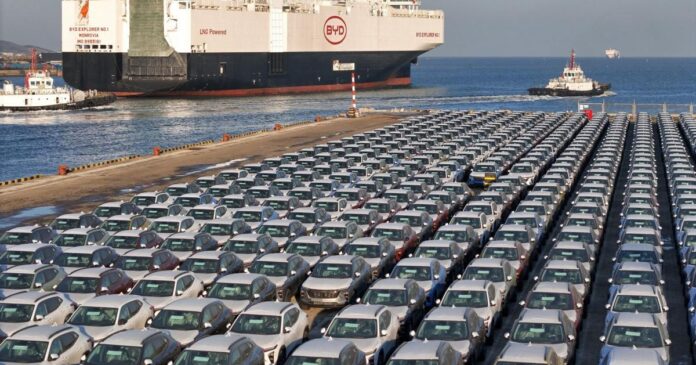

Industry leaders have expressed deep concern that a recent electric vehicle (EV) deal with China could potentially place Canada’s entire auto sector at risk. The deal, which involves the import and sale of Chinese EVs in Canada, is being viewed by many as a threat to the domestic market.
At present, China is the world’s largest EV market. The country has been aggressively promoting the use of EVs as a way to combat air pollution and reduce its dependence on imported oil. This has led to a surge in the production and sale of EVs in China, with several Chinese companies emerging as global leaders in the EV sector.
However, industry leaders in Canada are worried that the influx of Chinese EVs could undercut the domestic auto industry. They argue that Chinese companies, with their massive production capabilities and lower costs, could potentially flood the Canadian market with cheap EVs, thereby threatening the viability of Canadian auto manufacturers.
These concerns are not without basis. In recent years, China has been aggressively pursuing trade deals around the world, often at the expense of local industries. The Chinese government has also been known to heavily subsidize its domestic industries, further skewing the playing field in favor of Chinese companies.
The Canadian government, on the other hand, has been trying to promote the use of EVs in the country. The government has set ambitious targets for the adoption of EVs and has been offering incentives to consumers to switch to EVs. However, the recent deal with China could potentially undermine these efforts, as it could lead to a flood of cheap Chinese EVs in the Canadian market.
While the deal is likely to benefit consumers, who would have access to a wider range of affordable EVs, it could potentially jeopardize the future of the Canadian auto industry. Some industry leaders have called on the government to rethink the deal and take steps to protect the domestic auto industry.
The government, for its part, has said that it is aware of the concerns and is closely monitoring the situation. It has also reiterated its commitment to promoting the use of EVs in the country and said that it will continue to support the domestic auto industry.
However, it remains to be seen how the government will balance its desire to promote the use of EVs with the need to protect the domestic auto industry. The outcome of this situation could have far-reaching implications for the future of the auto industry in Canada.
