

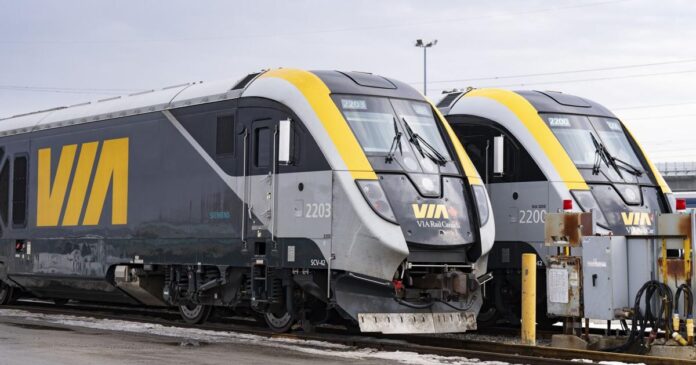

Hundreds of Via Rail passengers found themselves in a challenging situation when they were stranded overnight due to a mechanical failure on their train near Brockville, Ont. What was supposed to be a two-hour trip turned into a 16-hour ordeal, as passengers waited for rescue on the three stalled trains. “It was something like 16 hours in the end for a two-hour trip,” said one dismayed traveller.
Unforeseen Mechanical Failure Leads to Stranding
On that fateful night, a major mechanical failure left hundreds of passengers stranded on three Via Rail trains. The trains were travelling along a busy corridor between Toronto and Montreal, a route that typically takes two hours. However, due to the unforeseen issues, the journey was extended to an unprecedented 16 hours, leaving passengers frustrated and exhausted.
Passengers’ Ordeal
During the prolonged delay, passengers were left with little information about their predicament. “It was something like 16 hours in the end for a two-hour trip,” said one passenger, reflecting the frustration felt by many on board. Despite the difficult circumstances, passengers reportedly managed the situation with patience and understanding, relying on each other for emotional support during the trying experience.
Via Rail’s Response
Via Rail responded to the incident promptly, and emergency services were on hand to assist passengers. Via Rail communicated with stranded passengers, providing updates and ensuring that passengers were safe and comfortable. Despite the lengthy delay, the company’s swift response and ongoing communication with passengers were commended.
Lessons Learned
The incident served as a stark reminder of the importance of effective crisis management in the transportation industry. It also highlighted the resilience and patience of passengers in the face of adversity. The transportation industry can learn valuable lessons from this incident, particularly the need for prompt communication and the provision of essential services during unexpected delays.
Conclusion
While the incident was undoubtedly a challenging experience for all those involved, it demonstrated the capacity of people to adapt to unexpected situations. It also highlighted the importance of timely and effective communication from transportation companies during crises. As the industry continues to evolve and improve, it is experiences like this that will guide future improvements in passenger service and crisis management.
