

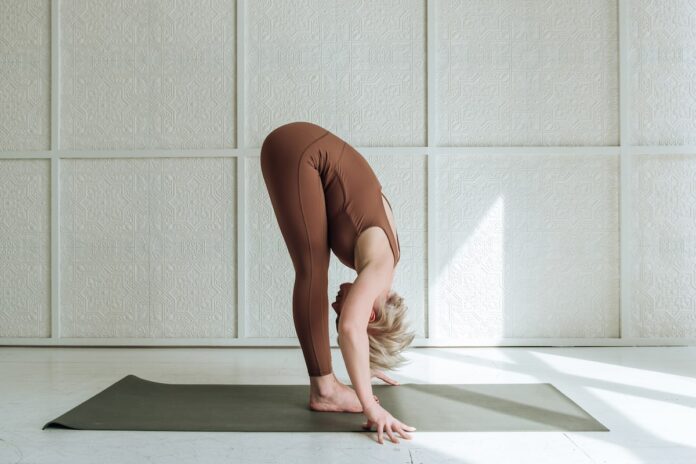

Stretching isn’t the only way to increase range of motion. There are several other methods, including resistance training and pilates, that can provide equivalent benefits. However, the effectiveness of these techniques often depends on factors like warming up beforehand and individual anatomical limitations. While stretching is a common practice among fitness enthusiasts, the benefits and limitations of this approach are still a topic of ongoing research and debate.
Understanding the Importance of Range of Motion
David Behm, a professor at Memorial University’s School of Human Kinetics and Recreation, emphasizes the importance of understanding the term “range of motion” rather than “flexibility”. The range of motion refers to the degree to which a joint can move before it hits its structural limit, which can’t be altered by stretching exercises. For instance, the ball-and-socket joint of the hip can only be moved to a certain extent before it comes bone on bone. The only way to change this is through a hip replacement surgery.
Alternatives to Stretching
Behm’s research team has found that resistance training can provide benefits similar to stretching. Pilates and other methods that load tissues through a full range of motion can also be beneficial. However, regardless of the method used, Behm highlights the importance of warming up beforehand. Warming up can be as simple as performing the same movement with lighter weight. The goal is to increase the temperature of the tissues being worked, which in turn reduces the viscosity of the muscle, making stretching more effective.
How Much Range of Motion is Enough?
According to Behm, two to three sets of 20 to 30 seconds in a warm-up or two to four minutes of stretching in a separate workout are enough to provide meaningful benefits. However, many people are restricted in their range of motion due to factors like injuries, genetics, or aging. Therefore, what is considered “enough” may vary from person to person. Personal trainer Lucas Hardie suggests simple exercises like hanging from a bar or a forward fold to maintain general health and improve range of motion.
Dynamic Versus Static Stretching
Static stretching, where you hold a position for more than 60 seconds, is often associated with a lowered ability to produce strength or power. However, Behm points out that your range of motion could be a higher priority than your absolute output. If performance is a concern, Behm suggests splitting workouts between your primary sport and supplementary stretching sessions. However, if time or energy are limitations, the trade-off may be worth it.
The Role of Mindfulness in Stretching
Hana Lukac, founder of Mula Yoga in Toronto, emphasizes the role of mindfulness in fine-tuning range of motion. She believes that being aware of one’s breath and body can greatly enhance the effectiveness of stretching exercises. In an environment filled with noise and distractions, it becomes especially important to find some quiet to tune into one’s body and feel the subtleties of movement.
