

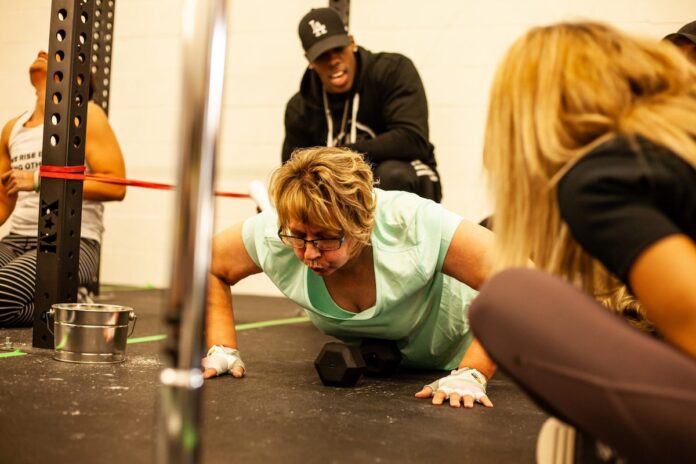

One of the toughest strength workouts out there is practically equipment-free, relying only on your bodyweight and the power of gravity. Calisthenics, a workout style that hails from ancient Greece, has stood the test of time and is still a powerful method for building muscle, stamina, and endurance. This workout style is simple, yet effective, and can be done by anyone, regardless of their age or fitness level.
Understanding Calisthenics
Calisthenics is a form of exercise that includes bodyweight exercises like squats, pushups, and pull-ups. The intensity and complexity of the workouts can range from simple squats to complex exercises like the “human flag”, where you hold your body horizontally in mid-air from a vertical pole. Such exercises not only require physical strength but also instill courage and confidence in the practitioner.
Calisthenics is easily adaptable to your unique level of strength and skill, making it beginner-friendly and safe for people of nearly any age. According to Janie Stel, the current Canadian freestyle champion and co-founder of the Women’s Calisthenics Organization, “Age is just a number, and you see it in calisthenics more than any other industry I’ve seen in fitness.”
The History and Modern Practice of Calisthenics
Calisthenics dates back to the Spartan warriors in Greece around 600 BC and has evolved significantly since then. In the early 1800s, it was one of the few acceptable forms of exercise for women. By the 1950s, fitness guru Jack LaLanne popularized calisthenics by demonstrating how anyone could get fit from the comfort of their living room.
Today, calisthenics is both an accessible form of exercise for beginners and a competitive sport globally. Its core movements, such as push-ups, pull-ups, dips, squats, and hollow-body holds, require very little equipment. This makes calisthenics a convenient workout regimen that can be done almost anywhere, even in a park, earning it the nickname “street workout”.
Benefits of Calisthenics
Despite appearing intimidating with its mid-air tricks and high intensity, calisthenics provides both mental and physical benefits. It helps improve functional strength, mobility, control, and stability. It also engages multiple muscle groups, building total-body strength. Beginners can start with scaled-back versions of basic moves and gradually progress to more complex exercises. The sense of mastery gained through learning new skills can boost confidence, problem-solving skills, and mental acuity.
Getting Started with Calisthenics
Calisthenics is a low-barrier entry exercise as it can be done anywhere, mostly equipment-free. For those who prefer to workout with others, some calisthenics gyms and clubs hold meetups where people of all levels of ability come together to practice. Beginners can start with exercises like lunges, planks, burpees, and jumping jacks at home, gradually working up to more advanced exercises.
As Catherine Blanchard-Hoang, co-founder of the Women‘s Calisthenics Organization, stated, “What I like about calisthenics is there’s endless progression, but you can start with no experience.” This sentiment is echoed by Ethan Lawson of Calisthenics Canada, who emphasizes the accessibility, regression, and progression that calisthenics offers. It’s a workout that can be scaled to fit the needs of anyone, from an elderly person to a young child.
