


According to recent data from the Canadian Real Estate Association (CREA), November home sales were down almost 11% annually, indicating that the market has entered what appears to be a ‘holding pattern’. This decline in national home sales, compared with the same month last year, suggests a significant shift in the real estate landscape as we head into 2026.
Unpacking the 10.7 Percent Decline in Home Sales
The 10.7 percent decrease in November home sales marks a notable downturn in the real estate market. This drop is not an isolated occurrence but rather part of a broader trend detected by the CREA. Various factors could be contributing to this decline, such as economic uncertainty, changes in housing policies, or fluctuations in demand and supply.

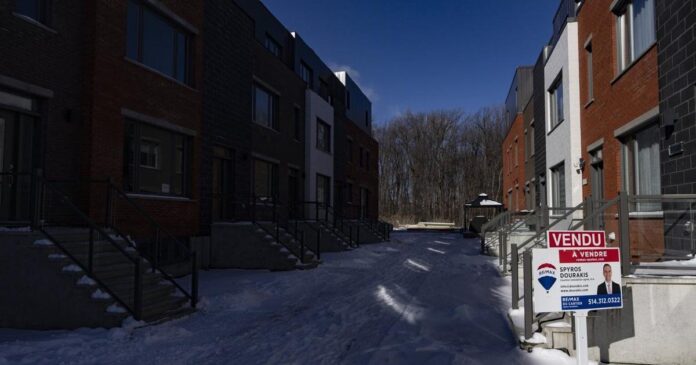
This graphic representation of the Canadian housing market trend clearly visualises the impact of this decline on the national level. It is essential to consider these changes in the context of broader economic and social factors to fully understand their implications.
The ‘Holding Pattern’ of the Real Estate Market
The CREA describes the current state of the real estate market as a ‘holding pattern’. This term usually refers to a situation where there is little to no change or progress. The market is essentially ‘on hold’, with buyers and sellers both being cautious due to uncertain conditions.
While the term may sound negative, it doesn’t necessarily mean that the market is stagnant. It could also suggest a period of consolidation before a potential uptick. The ‘holding pattern’ could be a temporary phase, resulting from external factors such as policy changes, economic conditions, or global events.
Looking Ahead: The Future of the Canadian Real Estate Market
While the decrease in home sales in November is significant, it’s important to remember that the real estate market is cyclical and subject to fluctuations. Whether the current ‘holding pattern’ persists or gives way to growth remains to be seen.
Continued monitoring of the market trends, coupled with expert analysis, is essential for understanding the future direction of the Canadian real estate market. Regardless of the short-term fluctuations, the real estate market remains a vital part of the Canadian economy, contributing significantly to its GDP.
Through careful analysis and understanding, potential buyers and sellers can navigate this ‘holding pattern’ and make informed decisions about their real estate transactions.
