


As the world of work continues to evolve, a significant shift has been observed in the workspace sector. Traditional office spaces are giving way to flexible workspaces, opening up new possibilities for businesses and employees alike. This trend, which took off during the pandemic, has seen a rapid expansion, particularly in small towns and suburbs. As the demand for flexible, convenient, and cost-effective workspaces grows, it is projected that by 2030, the flexible workspace market will grow by 600%, transforming 30% of office space into hybrid workspaces.
Flexible Workspaces: The New Norm
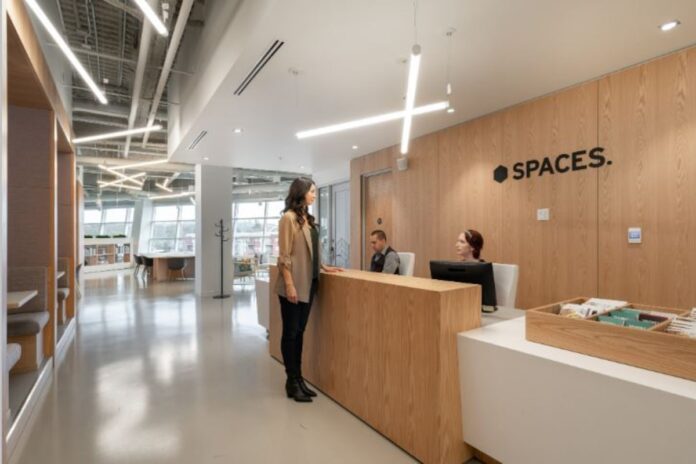
When attorney Rocky Kim decided to set up his own law practice, he chose a furnished office provided by global co-working firm Spaces in the Innovation Centre in downtown Kelowna. His experience is representative of the growing trend towards flexible workspaces. “It was literally plug and play, with internet, security, coffee service and cleaning all included,” he shares. Kim further appreciates the flexibility offered by such setups, which allow him to upscale as his business grows.
Ashley Dere, a vice-president of corporate real estate company Colliers Canada, attests to the ongoing boom in short-term furnished office leasing. With office vacancies increasing due to hybrid work, companies specializing in co-working and private office facilities have been quick to fill the void. Even landlords have begun converting vacant office floors into furnished suites that can be rented by the year, or even on an hourly basis.
Demographic Shifts and Changing Demand
Interestingly, the demand for flexible workspaces is not restricted to startups or small businesses. “We’re seeing growth in flexible office leases by the tech sector, artificial intelligence and international companies that want to get their foot in the door in Canada, but don’t know how fast they will grow,” reveals Dere. Established companies are also embracing this trend, using such spaces across various suburban locations to aid in employee retention and recruitment.
While co-working spaces have seen a surge in popularity, there’s a growing demand for closed offices that offer privacy and the ability to concentrate. Colliers represents Quebec flexible office company Hedhofis, which has expanded from five locations to 12 since 2022. Almost 19% of their leases are corporate suites for companies with 10 to 50 employees.
Benefits of Flexible Workspaces
Mark Dixon, chief executive and founder of International Workplace Group (IWG), shares that about 80% of new IWG locations globally are opening in smaller towns and suburbs, closer to where people live. This is a response to employee demand for shorter commutes, with IWG research revealing that only 21% of employees would take a new job that requires a daily commute of longer than 30 minutes.
Aside from convenience, hybrid work is also linked to increased productivity. A survey by Mortar Research for IWG found that 44% of Canadian hybrid workers reported taking fewer sick days thanks to having more flexibility over how and where they work.
Flexible workspaces also offer significant cost savings to businesses. IWG research found that 44% of CEOs reduced their traditional leased office space by 25% or more since the pandemic, leading to lower energy consumption and operational costs.
Looking Forward
Robert Half’s new benefits and perks survey found that 53% of employers plan to continue offering hybrid work options to those in leadership roles, with an additional third offering hybrid options to all regular employees regardless of seniority. This shows the growing acceptance and integration of hybrid work models into mainstream business operations.
For startups, the advantage of flexible workspaces is clear. Reflecting on his own experience, Kim shares, “I don’t know how I would have facilitated this kind of growth any other way.” As he plans to expand his firm and partner with another law professional, he is confident that the flexibility offered by Spaces will support his business growth.
In summary, the expansion of flexible workspaces to small towns and suburbs signifies an important shift in how we work. As businesses and employees increasingly embrace this trend, it’s clear that the future of work is flexible.
