

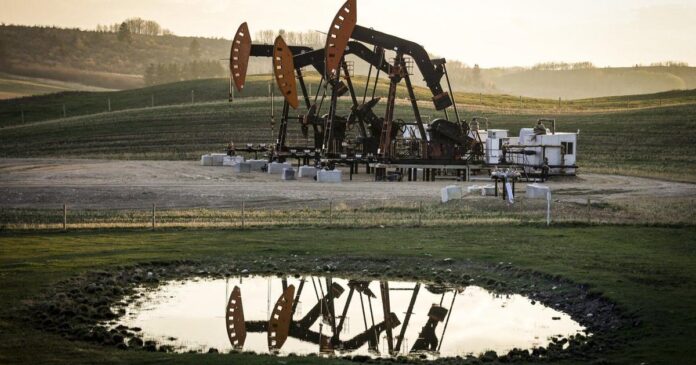

As the global crude oil market continues to grapple with the impact of prices lingering below US$60 per barrel, energy experts are suggesting that U.S. oil producers will likely be the first to reduce output. However, they also note that the Canadian oilpatch can withstand crude market doldrums, with producers in Canada expected to maintain their current production levels.
U.S. Oil Producers Expected to Cut Output
According to energy analysts, U.S. oil producers are likely to respond to the continuing slump in crude prices by reducing their output. This is largely due to the higher costs associated with unconventional oil extraction methods, such as hydraulic fracturing, which are prevalent in the U.S. oil industry. According to the U.S. Energy Information Administration, these methods make it more difficult for U.S. producers to remain profitable when global crude prices fall below US$60 per barrel.
Canadian Oilpatch Well-Positioned to Withstand Market Doldrums
Conversely, Canadian oil producers are expected to be able to weather the current market conditions better than their U.S. counterparts. This is due, in part, to the nature of Canada’s oil industry, which is less reliant on unconventional extraction methods. Natural Resources Canada notes that the majority of Canada’s crude oil production comes from conventional methods, which are generally less cost-intensive.
Factors Supporting the Resilience of the Canadian Oilpatch
Several factors contribute to the resilience of the Canadian oilpatch in the face of fluctuating global crude prices. One of these is the favorable exchange rate between the Canadian dollar and the U.S. dollar, which can help offset the impact of lower global crude prices on Canadian producers. Additionally, Canada’s oil industry benefits from strong domestic demand, robust infrastructure, and a steady supply of skilled labor.
Implications for the Global Crude Market
If U.S. oil producers do indeed cut output in response to the current market conditions, this could have significant implications for the global crude market. Notably, it could lead to a tightening of global supply, which could in turn put upward pressure on prices. However, the impact of any potential U.S. output cuts would likely be mitigated by the continued production from Canadian producers.
In conclusion, while the current market doldrums are posing challenges for oil producers worldwide, the Canadian oilpatch appears to be well-equipped to navigate these difficulties. As such, Canadian producers are expected to continue playing a key role in the global crude market in the foreseeable future.
