

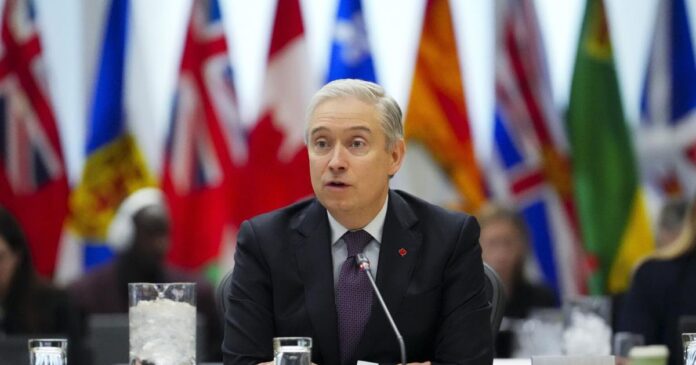

In a pivotal shift to bolster the European economy and reduce dependability on China, Canada’s Finance Minister François-Philippe Champagne has voiced the country’s potential in aiding Europe’s need for critical minerals. He emphasized the urgency stating, “Time to move on extraction, refining of critical minerals in Canada: Champagne.”
Champagne’s Call for Action
While addressing reporters in Germany, Champagne underscored Canada’s rich potential in mining and refining critical minerals. His statement was not just a declaration of Canada’s mineral wealth, but an invitation to European nations to pivot their dependability from China to Canada for their mineral needs.
Canada’s Mineral Wealth
Canada is globally recognised for its abundance in minerals. It houses 60+ minerals and metals, and is the world’s largest producer of potash and uranium, and a significant source of gold, nickel and diamonds. This not only makes Canada a potential key player in the global mineral market, but also a reliable alternative to China’s dominant mineral supply chain.
The Rising Importance of Critical Minerals
Critical minerals like lithium, cobalt, graphite, and rare earth elements play a significant role in modern technologies, including renewable energy systems, electric vehicles, and defence equipment. China currently dominates the global supply of these minerals. However, growing geopolitical tensions and supply chain vulnerabilities have pushed countries to seek alternative sources. This is where Canada’s potential comes into play.
Canada’s Plan to Capitalise on its Mineral Wealth
Canada aims to capitalise on its mineral wealth to become a global leader in the extraction and refining of critical minerals. It has already developed the Canadian Minerals and Metals Plan (CMMP), a strategic roadmap for the country’s mining future. Champagne’s statement underscores this plan and calls for its accelerated implementation.
The Impact on Europe
Champagne’s proposition could significantly alter Europe’s supply chain, potentially reducing its dependence on China. This move could bring mutual benefits, aiding European nations in diversifying their mineral supply chain while also boosting Canada’s economy.
Conclusion
In conclusion, Champagne’s call for action represents a significant opportunity for both Canada and Europe. It underscores the importance of diversifying the global supply chain of critical minerals, and highlights Canada’s potential as a leading global player in this sector.
