

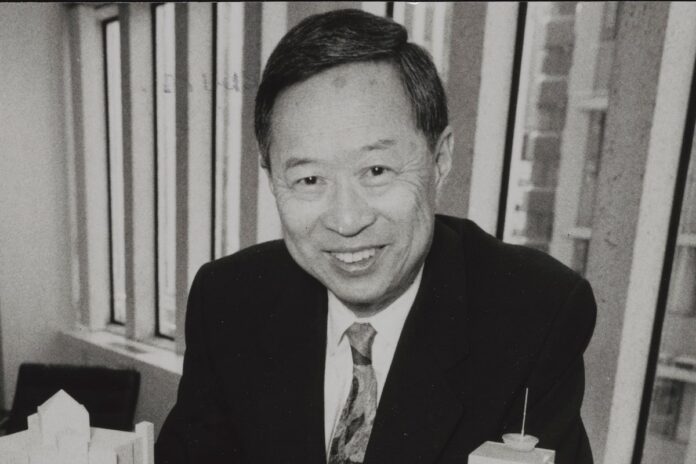

The name Stanley Kwok is synonymous with the transformative urban planning that characterized Vancouver in the 1980s and 1990s. As a developer, architect, and planner, Kwok played a pivotal role in the redevelopment of the Expo 86 lands. His vision and expertise laid the foundation for what is now known as “Vancouverism,” an approach that combines dense residential and commercial space, parks, and other amenities near transit, with open public spaces, abundant light, and scenic views. Urban planner Stanley Kwok combined high density and livability in Expo 86 redevelopment, an approach that continues to shape Vancouver’s built environment.
The Expo 86 Redevelopment
The redevelopment of Expo 86 lands under Kwok’s stewardship is widely acknowledged to have positioned Vancouver as a major magnet for foreign investment, particularly in real estate. This has consequently made Vancouver one of the world’s most expensive cities for real estate. Developer John D’Eathe credits the surge in property investment from Asia to the publicity generated by Expo and the interest shown by Li Ka-shing, one of Asia’s wealthiest individuals.
Stanley Kwok’s Journey
Born on January 2, 1927, in Shanghai, Stanley Tun-Li Kwok came of age during a turbulent period in China’s history. Despite the challenges, he pursued architecture at Shanghai’s English-speaking St. John’s University and later at the Architectural Association school in London. He eventually established himself as a leading architect in Hong Kong, designing over 200 buildings and serving as the president of the Hong Kong Society of Architects.
Canadian Ventures
Kwok moved to Canada in 1968, following his friend John D’Eathe. He quickly made his mark in his adopted home, becoming vice-president of the U.K.-based developer Grosvenor. In partnership with chemical company Canadian Industries Limited, they launched their own company, Canadian Freehold Properties, developing property in Asia and North America.
The sale of their company in 1979 was timely, as it preceded a market collapse. However, the advent of Expo 86 offered an opportunity to reinvigorate the economy. Kwok was appointed president of Crown corporation BC Place Ltd., which was responsible for future plans for the Expo 86 site. He also joined the board of the Expo 86 Corporation, which planned and operated the world’s fair.
Expo 86 Lands Sale Controversy
After the fair, Kwok had anticipated that the Expo site would be serviced, subdivided, and sold in parcels to local developers. However, the Social Credit government decided to sell the site as one large parcel, a decision Kwok disagreed with. He resigned from BC Place Ltd., believing the government should service the land and sell it off progressively for greater profit.
Transforming Vancouver’s Skyline
Kwok was eventually recruited by Hong Kong billionaire Li Ka-shing to assist with a bid for the Expo site. Their bid was accepted, and Kwok seized the opportunity to transform Vancouver’s skyline. His vision, which included integrating the development into the city’s street patterns, prioritizing pedestrian-friendly streets, and creating ample open space, set the standard for urban development in Vancouver. This was the genesis of “Vancouverism”.
Kwok’s influence extended beyond Vancouver. He worked on the master plan for Dubai Marina, Purdy’s Wharf in Halifax, and Crystal Mall at Metrotown in Burnaby, B.C. He served on over 20 boards for various organizations, including the Bank of Montreal, BC Hydro, BC Cancer Foundation, and the Vancouver Foundation. In 2012, Kwok received an honorary doctorate from Victoria’s Royal Roads University and was awarded the lifetime achievement award from the Association of Chinese Canadian Entrepreneurs in 2016.
Stanley Kwok, a visionary who redefined urban planning, passed away on December 7, following a cancer diagnosis. He leaves behind a legacy that continues to shape cities around the world.
