

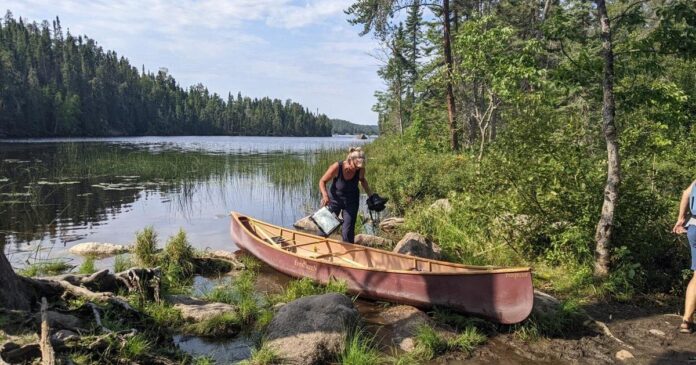

For many enthusiasts of outdoor activities such as paddling, the impending loss of the Manitoba government map store is a cause for concern. This resource has been invaluable to them in planning their excursions, providing detailed topographic maps that are not easily found elsewhere. As the digital age progresses, the physical map store’s closure signifies a shift in the way we access geographical information, and not everyone is happy about it.
Local Impact of the Map Store Closure
The Manitoba government map store has served as an essential resource for many outdoor enthusiasts. Paddlers, in particular, have relied on the store’s detailed topographic maps to plan their journeys through the region’s numerous waterways. The store’s closure is, therefore, seen as a significant loss to this community.
Manitoba’s Digital Shift
The closure of the Manitoba government map store is part of a larger trend towards digitalization. While the Manitoba government assures that digital versions of the maps will still be available, many users argue that digital maps do not offer the same level of detail and usability as their physical counterparts.
Challenges with Digital Maps
Digital maps, while convenient, often lack the detail found in physical maps, especially in remote or less-populated areas. They also require a reliable internet connection or pre-downloaded data for access, which is not always available in outdoor settings. Thus, for many paddlers and others who often venture into less accessible areas, the loss of the physical map store is a significant blow.
The Value of Physical Maps
Physical maps offer a level of detail and tangibility that digital maps often cannot match. They provide a broad, unbroken view of an area, making it easier to visualize routes and landmarks. They are also more reliable in remote areas, where internet connectivity may be problematic. For these reasons, many outdoor enthusiasts still prefer physical maps, despite the convenience of digital alternatives.
The Future of Mapping
While the closure of the Manitoba government map store is regrettable, it also points to the need for better digital mapping solutions. As we move towards an increasingly digital future, there is a growing demand for digital maps that offer the same level of detail and usability as physical maps. If this can be achieved, then perhaps the loss of the physical map store will not be in vain.
For now, though, paddlers and others in Manitoba will have to adapt to the digital shift, whether they like it or not. The loss of the map store is a poignant reminder of the changes that digitalization brings, and the challenges that lie ahead in adapting to these changes.
