

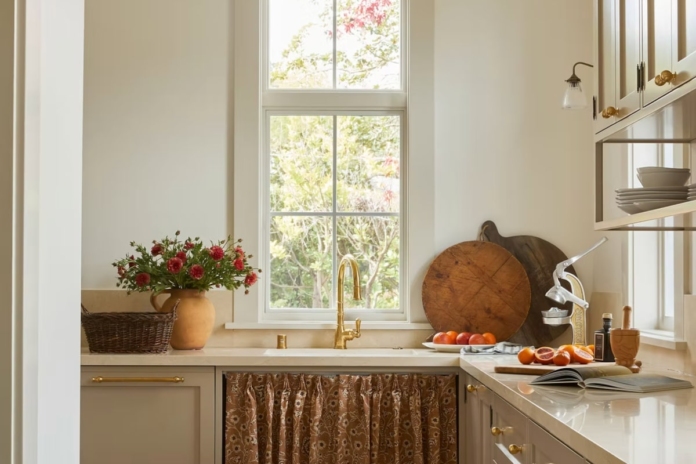

The nostalgic, farmhouse-inspired sink skirt is having a moment. This charming and practical design trend is making a comeback in homes, adding a touch of whimsy and a dash of pattern to kitchens and bathrooms. But don’t be fooled, these stylish fabric panels are more than just a pretty addition. They also serve a functional purpose, hiding clutter and unsightly plumbing while adding warmth and personality to a space.
A Brief History of Sink Skirts
Born out of necessity in 18th- and 19th-century Europe, sink skirts were commonly used in Britain to conceal clutter in kitchens and hide plumbing in bathrooms. At a time when freestanding furniture was the norm, these fabric panels offered an inexpensive and easy solution to keep spaces tidy and organised. Fast forward to the present, and the sink skirt is enjoying a revival, with modern homeowners appreciating its functional benefits and aesthetic appeal.
Bringing Personality to Kitchens and Bathrooms
Ashley Montgomery, principal designer at Ashley Montgomery Design, is a fan of the trend. “I’ve been loving the sink-skirt moment,” she said. “They welcome a nostalgic feel where personal style matters over predictable cabinetry.” Indeed, sink skirts do more than just hide clutter. They add a dash of colour, break up the monotony of cabinetry, and evoke a sense of nostalgia. From playful florals to chunky stripes and billowy ruffles, these fabric panels are a visual treat and can instantly transform a space.
The Appeal of Sink Skirts
Interior designers are increasingly incorporating sink skirts in their designs, whether it’s in a beadboard-lined pantry or a luxurious marble bathroom. Mandy Milks, co-founder and creative director of Hemme Custom, believes that sink skirts can add a softer detail to a space, especially in modern bathrooms which can often feel stark and cold. “Sink skirts are a softer detail but so impactful, especially in a hard-surface space like a bathroom,” she said.
Choosing the Right Fabric for Your Sink Skirt
If you’re considering adding a sink skirt to your kitchen or bathroom, it’s important to choose the right fabric. According to Milks, it’s best to opt for lighter-weight linen, cotton, or a blend, and to avoid silk which can stain easily. Steer clear of upholstery-weight fabrics as they’re bulky and don’t gather well.
The Practical Side of Sink Skirts
Beyond aesthetics, sink skirts also serve a functional purpose. They can be used to hide unsightly pipes and cleaning products, and in commercial settings, they can add a touch of homeliness. Alana Dick, an interior designer at Ivory Design Company, recently used a skirt to conceal a pipe and safety cover in a wheelchair-accessible bathroom at a co-working office space. “A skirt adds softness and a residential quality you wouldn’t normally see in a commercial wheelchair-accessible washroom,” she said.
A Word of Caution
While sink skirts offer many benefits, they also come with a few caveats. As Toronto-based interior designer Meredith Heron points out, they can be “a charming biohazard” in certain situations. It’s therefore crucial to use a skirt fabric that’s easily removable and washable to maintain cleanliness and hygiene.
In conclusion, the sink skirt is a versatile design element that can add charm, personality, and function to a space. Whether you’re aiming for a nostalgic feel or simply trying to hide clutter, it’s a trend worth exploring.
