

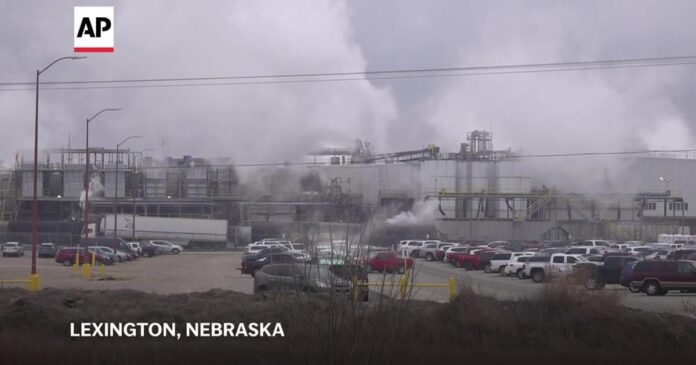

In the heart of America’s Great Plains, a small Nebraska town, Lexington, faces a grim reality as it stands on the brink of economic collapse. The “American Dream” for many residents is at risk following the announcement of the closing of Tyson Foods’ beef plant, a major employer in the region. The plant’s closure threatens the livelihood of approximately 3,200 workers and their families, creating a ripple effect of job losses that could reach up to 7,000 in the surrounding counties. This article delves into the impact of such massive job cuts on Lexington and its community, offering a stark illustration of what happens to a small Nebraska town when 3,200 workers lose their jobs.
A Town in Fear
On a freezing day after Mass at St. Ann’s Catholic Church, parishioners in Lexington, Nebraska, huddled together, their faces barely masking the fear that had seized their town. The impending closure of the Tyson plant cast a pall over the church basement and the holiday season. Alejandra Gutierrez, a local resident, voiced the shared sentiment, “Suddenly they tell us that there’s no more work. Your world closes in on you.”
The Economic Impact
According to Michael Hicks, director of the Center for Business and Economic Research at Indiana’s Ball State University, losing 3,000 jobs in a city of 10,000 to 12,000 people is a significant event. The job losses are expected to reach 7,000, largely in Lexington and the surrounding counties, according to a report from the University of Nebraska, Lincoln. This will have serious repercussions on Lexington’s local businesses, from restaurants and barbershops to grocers and taco trucks, leading to a potential exodus of families seeking employment opportunities elsewhere.
Unraveling the American Dream
The plant’s closure threatens to unravel a Great Plains town where the American Dream was still attainable for many. Immigrants who didn’t speak English and never graduated high school found a safe community in Lexington where they could buy homes, raise children, and send them to college. But now, thousands of Tyson workers face an uncertain future, unable to pay their mortgages, car payments, property taxes, and tuition costs.
Community Response
Despite the looming crisis, the spirit of community continues to thrive at St. Ann’s church. Parishioners, many of whom will be out of work next month, donated to a fund for families in financial need. However, the uncertainty of the future continues to weigh heavily on the minds of workers and their families.
The Domino Effect
The domino effect of the plant closure could lead to a significant decrease in population, teacher layoffs due to empty seats in schools, and fewer customers for local businesses. This is a harsh reality that local businesses like Los Jalapenos, a favorite Mexican restaurant of Tyson workers, have to face.
Hope for a New Beginning
Many, including City Manager Joe Pepplitsch, are hoping Tyson puts the plant up for sale and a new company comes in bringing jobs. However, such a solution isn’t a quick fix and comes with its own set of challenges. As the community braces for the plant closure, they cling to hope, resilience, and their shared sense of community.
