

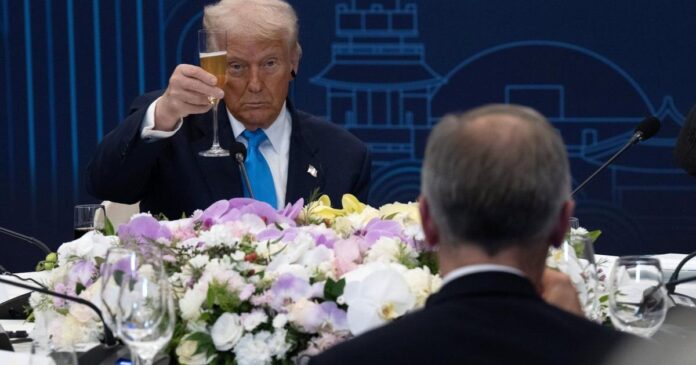

Midterms and tariffs: 2026 could be a critical year for Canada-U.S. relations. With Donald Trump’s return to the White House, the global trade landscape has been significantly altered, allies have been left unsettled, and political and social boundaries within the United States have been pushed to their limits.
Trump’s Impact on Global Trade and Tariffs
The Trump administration’s aggressive stance on trade has led to a significant shift in global trade dynamics. The president has been known for his ‘America First’ economic policy, which includes renegotiating or withdrawing from international trade agreements that he deems unfavorable to the U.S. This approach has resulted in a series of tariff wars, most notably with China, causing a ripple effect on the global economy.1
For instance, Trump’s decision to impose tariffs on aluminum and steel imports in 2018 triggered a trade war with several countries, including Canada. These tariffs, along with the renegotiation of the North American Free Trade Agreement (NAFTA) into the United States–Mexico–Canada Agreement (USMCA), have caused uncertainty and strained Canada-U.S. relations.2
Trump’s Influence on Political and Social Boundaries
Trump’s return to the White House has also resulted in significant changes within the U.S, particularly in terms of political and social boundaries. His unconventional and often controversial approach to politics has sparked intense debate and division among Americans.
From his stance on immigration to his handling of racial tensions, Trump’s policies and rhetoric have pushed the boundaries of what is traditionally expected from a U.S. president. His use of social media as a tool for political communication, for example, has dramatically altered the way politics is conducted in the country.3
Looking Ahead: Midterms, Tariffs, and 2026
With the midterms approaching and the potential for further tariffs, 2026 could indeed be a pivotal year for Canada-U.S. relations. The outcome of these elections could determine whether Trump’s policies continue or are rolled back, with far-reaching implications for trade relations and the global economy.
Furthermore, the ongoing uncertainty around tariffs adds another layer of complexity. The possibility of further trade disputes could have a significant impact on the Canadian economy, which relies heavily on its trade relationship with the U.S.4
In conclusion, as we look towards 2026, it is clear that the implications of Trump’s return to the White House extend far beyond the U.S. The changes brought about by his administration have upended global trade, rattled allies and significantly altered political and social norms.
1 How Trump changed trade and America lost | Brookings
2 USMCA: The new trade deal between the US, Canada, and Mexico, explained | The Conversation
3 After Social Media Bans, A Defining Moment For The Future Of American Speech | NPR
4 Trump’s new tariff threats against Canada worry economists | CBC News
