

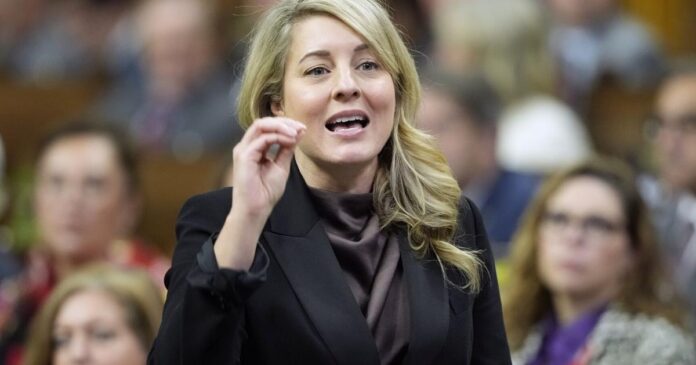

Mélanie Joly likes to talk tough. Now she has to deliver. The lawyer, former foreign affairs minister, and current industry minister has been vocal on trade issues, threatening lawsuits and demanding better offers. But with high stakes and potential backlash, Joly’s tough talk must translate into action and results.
Joly’s Stance on Key Issues
Mélanie Joly has been unflinching in her approach towards key economic issues. She threatened to take legal action against Stellantis, the multinational auto manufacturer, after it paused its Canadian auto production plans in Brampton. Joly was also vocal about the proposed takeover of one of Canada’s largest diversified mining companies, Teck Resources, by a British mining giant. She stated that the offer was insufficient and demanded better terms. In addition, she called out Lockheed Martin, the American jet maker behind the F-35 fighter plane, insisting that Canada is not getting enough economic benefit and considering purchasing Swedish planes instead.
The Three-Pronged Plan
Joly’s approach to Canada’s industrial strategy is clear and straightforward. In her words, “The plan is to do three things. First is to protect jobs. Second is to create jobs, and third is to attract talent and investment.” This strategy, however, is not without its risks. If Joly fails to deliver on these fronts, it could weaken Canada’s image and potentially lead to a backlash against the local companies and brands. This could also influence the decision-making of foreign investors, particularly in the midst of the tariff war initiated by former US President Donald Trump.
Dealing with Stellantis
Joly issued a notice of default to Stellantis, sparking further negotiations over the company’s commitments to maintain production at Brampton. This was in exchange for Ottawa’s contribution to the joint Stellantis and Korea-owned LG electric vehicle battery plant in Windsor. The government also revoked a break on counter-tariffs for Stellantis and GM. Joly’s tough stance is believed to be aimed at protecting domestic interests against the risk of de-investment.
Future Trade Directions
Despite her tough stance, Joly’s approach is viewed as geared towards achieving results, not just making threats. She has been clear about her expectations from companies and has engaged in direct talks with industry executives. The focus is on protecting and creating jobs, and attracting investment. However, the impact of tariffs and government-imposed sales mandates on the auto manufacturing industry cannot be overlooked.
The Fighter Jet Dilemma
In addition to the auto and mining industries, Joly has also been involved in Canada’s decision over the purchase of fighter jets. She suggested reconsidering the purchase of the full order of 88 F-35 fighter planes made by Lockheed Martin, citing insufficient industrial benefits for Canada. Instead, she showed interest in the Swedish manufacturer Saab’s offer to create substantial jobs by making Gripen fighter planes and the GlobalEye surveillance plane in Canada.
Joly’s decisions and actions reflect her commitment to protecting Canadian interests and jobs. However, the ultimate test lies in successfully delivering on her promises and navigating the complex international trade landscape.
