

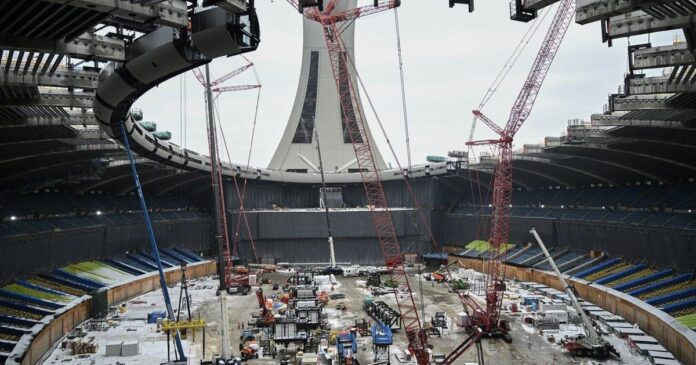

Fifty years after the Games, Quebecers are still spending on Montreal’s Olympic Stadium. Despite its iconic status, the stadium has been a contentious symbol of the 1976 Olympics, a grandiose project that left the city with a significant financial burden. Now entering 2026, the stadium finds itself in a familiar situation: under construction and without a roof, echoing its state when it first hosted the Games.
History and Current Situation of Montreal’s Olympic Stadium
Montreal’s Olympic Stadium, often referred to as the “Big O”, was initially built for the 1976 Summer Olympics. However, the stadium’s construction was plagued by delays and cost overruns, which left it incomplete at the time of the Games. In fact, the stadium’s retractable roof wasn’t finished until 1987, a shocking 11 years after the Olympics. (The Star)
The Stadium was once again under construction as it entered 2026, reminiscent of its state in 1976. The roof was being replaced due to its frequent rips and tears, which had become a safety concern. The total cost of the ongoing renovations is estimated to be a staggering $300 million (Montreal Gazette).
Public Opinion and Future Prospects
Public opinion on the stadium has been divided. While some see it as a symbol of Montreal’s status as a world-class city, others see it as an expensive reminder of a financial debacle. Despite this, the stadium has served as a versatile venue for various events over the years, from baseball games to concerts, and even as a temporary shelter for asylum seekers in 2017 (CBC News).
As for its future, the Quebec government sees potential in the stadium and believes the current renovations will increase its usability. They envision it as a multi-purpose venue that could host a variety of events, from sports to cultural gatherings. However, only time will tell if this vision can be realized and if the stadium can finally shed its troubled past (Global News).
Conclusion
In conclusion, Montreal’s Olympic Stadium, 50 years after the 1976 Games, continues to be a topic of debate among Quebecers. Despite the significant financial investments and ongoing renovations, the stadium remains a symbol of ambition, controversy, and the city’s enduring spirit. As it stands under construction once again, Montrealers can only hope for a brighter future for their iconic “Big O”.
