

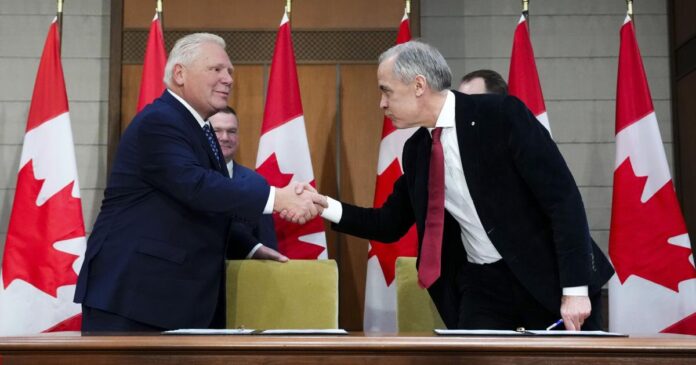

As the former Governor of the Bank of England, Mark Carney, prepares for a diplomatic visit to China, Ontario Premier Doug Ford has made his stance abundantly clear. “Doug Ford says he’s ‘100% dead against’ lifting Canadian tariffs on Chinese electric vehicles (EVs).” This statement comes as the global automotive industry undergoes a significant shift towards electrification, a move that China leads.
Understanding the Concern
Despite the global push towards sustainable transport solutions, Ford’s opposition to lifting tariffs on Chinese EVs stems from a concern about the competitiveness of the Canadian auto industry. He believes that removing these tariffs could potentially harm local manufacturers, ultimately leading to job losses and economic instability. Ford is urging Carney to consider the potential repercussions on the Canadian economy before making any decisions regarding trade relations with China.
China’s Dominance in the EV Market
China is currently the world’s largest producer of electric vehicles, contributing significantly to the global EV market. According to a report by the International Energy Agency (IEA), China accounted for 40% of global EV sales in 2020. The country also holds the largest market share of global EV sales, which may give Chinese manufacturers a competitive edge if tariffs were lifted. This dominance in the EV market is a significant concern for Ford, who believes that Canadian manufacturers should be given every opportunity to thrive in the face of this shift towards sustainable transport.
The Economic Impact
While the economic impact of lifting tariffs on Chinese EVs remains a contentious issue, proponents of the move highlight potential benefits such as increased competition, lower prices for consumers, and a faster shift towards a sustainable economy. However, Ford and other critics argue that these benefits could be offset by the potential harm to the local industry, including job losses and reduced competitiveness.
Looking Ahead
As Carney prepares for his diplomatic visit to China, the debate surrounding Canadian tariffs on Chinese EVs continues to heat up. The outcome of this debate could have far-reaching implications for the Canadian auto industry, the global EV market, and the country’s shift towards a sustainable economy. As the former Governor of the Bank of England and a respected figure in global finance, Carney’s decisions and negotiations during his visit to China will be closely watched.
The Role of Government
Ultimately, the decision to lift or maintain tariffs on Chinese EVs lies with the Canadian government. As Premier, Ford’s strong opposition to lifting tariffs represents a significant viewpoint within this decision-making process. However, the final decision will need to balance a range of factors, including the interests of local manufacturers, the potential for economic growth, and Canada’s commitments to reducing carbon emissions.
Conclusion
The debate surrounding Canadian tariffs on Chinese EVs is complex and multifaceted. As Carney heads to China, his negotiations and the eventual decision of the Canadian government will be critical in determining the future of the Canadian auto industry, and the country’s role in the global shift towards sustainable transport.
