


Affirming the importance of safeguarding against hate speech, the federal government’s efforts to pass an anti-hate bill have encountered a significant obstacle. A contentious debate has arisen among the main political parties regarding a proposal put forth by the Bloc Québécois to eliminate the religious exemption from Canada’s hate-speech laws.
Challenges to Anti-Hate Legislation
The religious exemption, a longstanding provision in the Criminal Code, allows individuals to evade prosecution for hate speech by invoking religious beliefs or quoting religious texts. The Bloc Québécois has consistently contended that this exemption can be exploited to propagate homophobia, racial discrimination, and antisemitism.
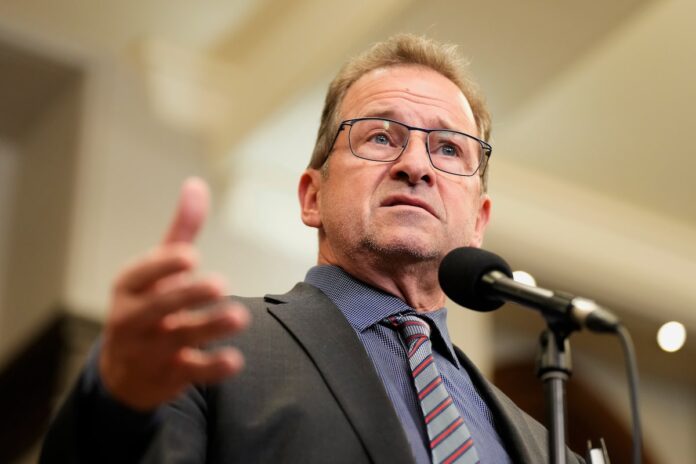
During a news conference, Bloc justice critic Rhéal Fortin disclosed that Justice Minister Sean Fraser personally assured him of the government’s backing for the Bloc’s proposed amendment to remove the religious exemption from the anti-hate bill.
However, a heated debate unfolded in the House of Commons, with the Conservative party expressing concerns that eliminating the exemption would infringe upon religious freedom. The Liberals are seeking support from the Bloc to advance the bill through the justice committee, while the NDP’s limited parliamentary representation precludes them from voting in committees.
Political Implications
Bloc Leader Yves-François Blanchet emphasized the widespread support in Quebec, including within the Quebec National Assembly, for abolishing the religious exemption. He underscored that failure to support the Bloc’s amendment would have political repercussions for the government.
Despite assurances from the Liberals, the Bloc’s amendment was unexpectedly not voted on in the committee, prompting accusations of deliberate delay tactics. Bloc MP Martin Champoux argued that removing the exemption would not impede religious freedom or expression.
Amidst concerns raised by religious groups about the proposed amendment, Conservative MP Larry Brock denounced the move as a “profound moral and civil-liberties mistake.” Conservative MP Andrew Lawton criticized the Bloc’s amendment as an attempt to stifle religious expression.
Legislative Considerations
The anti-hate bill aims to criminalize actions that obstruct access to places of worship and promote hatred towards religious and ethnic groups. The legislation would impose penalties, including up to 10 years in prison, for such offenses.
Justice Minister spokesperson Lola Dandybaeva reiterated the government’s openness to constructive amendments to the bill. The ongoing debate underscores the complexities surrounding the intersection of free speech, religious freedom, and combating hate speech in Canadian legislation.
