

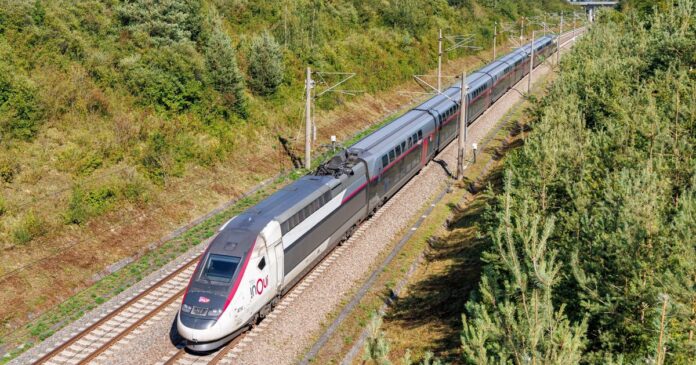

The Canadian government has made a significant stride towards the construction of the country’s first high-speed rail line. Named Alto, the first phase of the rail line will extend approximately 200 km, connecting the cities of Ottawa and Montreal. Alto will be a high-speed train capable of speeds up to 300km/h, drastically reducing travel times between major economic centers.
First Phase of High-Speed Rail Line
The overall plan for Alto includes a roughly 1,000-km-long high-speed rail line stretching from Toronto to Quebec City. However, the first phase of this ambitious project will see the construction of the Ottawa–Montreal corridor, with construction set to commence in 2029. The federal Crown corporation overseeing Alto aims to build dedicated tracks powered by overhead catenary electrical lines for the high-speed train. This infrastructure will enable the trains to reach their top speed, significantly reducing travel times and connecting regions that account for almost half of Canada’s population.
Strategic Planning and Construction Phases
According to the federal government, the decision to begin with the Ottawa-Montreal segment allows construction teams in both provinces to commence work simultaneously. This approach will equip the workers with the necessary experience to swiftly expand the network to Toronto and Quebec City. However, no specific timelines for the construction commencement of these remaining segments have been provided. Furthermore, it’s not yet clear when the first segment will be completed and operational.
Benefits and Challenges of Phase Construction
Constructing new high-speed rail lines in phases is a common practice, considering the vast costs, technical complexities, and political coordination required for such projects. By starting with a shorter or strategically chosen segment, governments and project teams can test their designs, establish construction proficiency, and demonstrate early benefits to garner long-term public and political support. However, this approach also has its potential pitfalls, as demonstrated by California’s controversial high-speed rail project. While the initial segment’s construction in the Central Valley was simpler and cheaper, it also drew criticism for being far from the largest population centers.
Community Involvement and Future Planning
Beginning in January 2026, a three-month public consultation process will be initiated to determine the preferred route alignment and station locations, minimize impacts, and maximize community benefits. This consultation process forms an integral part of the multi-stage planning required for such a significant infrastructure project. The president and CEO of Alto, Martin Imbleau, has stressed the importance of community engagement in shaping the project.
Financial Support and Partnerships
The Alto project will be supported by the federal government’s newly created Major Projects Office (MPO), designed to prioritize and fast-track significant economic and national security projects. The initiative will also be backed by forthcoming legislative amendments to streamline approval processes and reduce regulatory uncertainties. Although the exact construction cost is yet to be estimated, it is expected to run into tens of billions of dollars. The federal government has already earmarked $3.9 billion for the extensive technical design, engineering, and planning work required before construction begins. A private consortium named Cadence has been selected to plan, design, build, operate, maintain, and help finance Alto.
