

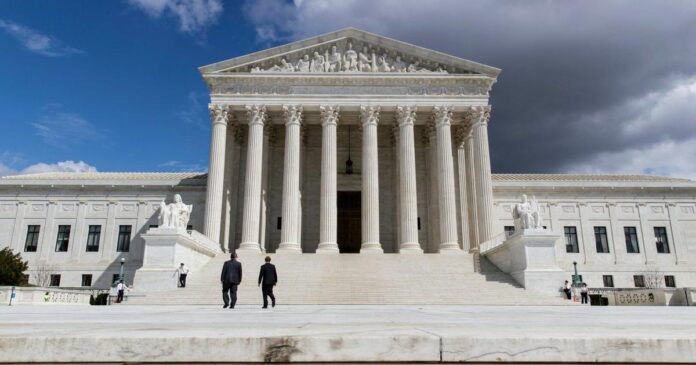

In a surprising turn of events, the U.S. Supreme Court didn’t issue a ruling on Trump’s tariffs Friday, leaving many in suspense. It was widely expected that the court would rule on the contentious issue of whether former President Donald Trump had the legal authority to impose tariffs under a law designed to give presidents special powers during emergencies. However, the court’s silence on the matter has left the question unanswered for now.
Debate Over Presidential Authority
The controversy lies in the interpretation of Section 232 of the Trade Expansion Act of 1962. This law grants the president the power to adjust import tariffs if it is determined that the goods being imported ‘threaten to impair the national security’. Former President Trump invoked this law in 2018, imposing hefty tariffs on steel and aluminum imports, a move that sparked legal challenges and set off a series of escalating trade wars.
Trump’s use of Section 232 was met with widespread criticism and legal challenges, with many arguing that he had overstepped his authority. These critics contended that the law was meant for emergencies and not for broad economic policy shifts.
Past Arguments and Court’s Skepticism
In previous arguments before the court, there was a notable level of skepticism towards the notion that Trump had the authority to impose tariffs under the special powers granted during emergencies. Several justices expressed concern about the lack of checks on the president’s power under Section 232. Justice Neil Gorsuch, for instance, questioned whether the law had effectively turned over the legislative branch’s power to regulate commerce to the executive branch.
The case was brought to the Supreme Court by the American Institute for International Steel (AIIS), a trade group which argued that the tariffs were unconstitutional. However, the court did not issue a ruling on the matter on Friday, leaving the legal community and many others awaiting its decision.
Implications of the Case
The implications of this case extend far beyond the specific tariffs imposed by Trump. The outcome could potentially redefine the powers of the presidency, particularly concerning trade policies. If the court were to rule that Trump’s use of Section 232 was indeed within his authority, it could set a precedent for future presidents to use the law broadly to implement their trade policies.
On the other hand, if the court were to rule against Trump, it could limit the powers of future presidents, forcing them to seek more direct approval from Congress for such measures. As such, this case holds significant implications for the balance of power between the executive and legislative branches of government.
The balance of power and the interpretation of the law are two key areas of concern, and the Supreme Court’s eventual ruling will be closely watched by legal experts, policymakers, and the public alike.
