

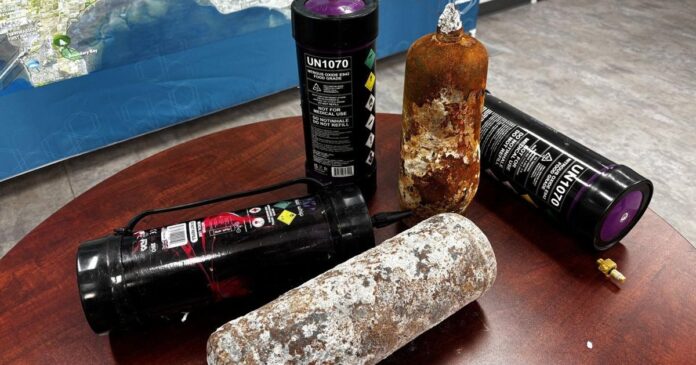

An alarming trend is occurring across the globe, where exploding nitrous oxide canisters are becoming a growing concern and no laughing matter for garbage collection services. Often discarded carelessly in the regular garbage stream, these high-pressure canisters pose a significant risk to workers who handle waste, from injury due to accidental detonation to health hazards from exposure to the gas itself.
The Dangers of Nitrous Oxide Canisters
The nitrous oxide canisters, often referred to as “whippits,” “hippie crack,” or “laughing gas,” are widely used in the food industry for whipping cream or in the medical field as anaesthetics. However, they are increasingly being misused as a recreational drug, leading to an increase in improperly disposed canisters.
These canisters can explode under high heat or pressure conditions, which are common in waste collection and processing facilities. When detonated, they can cause serious injury to workers, including burns, puncture wounds, and even death. Furthermore, exposure to nitrous oxide gas can lead to severe health issues, including headaches, dizziness, and in severe cases, nerve damage or death from oxygen deprivation.
Impact on Waste Management Services
The increasing number of nitrous oxide canisters in the garbage stream is placing a significant burden on waste management services. Workers must exercise extra caution when handling garbage, leading to increased processing time and cost. In addition, there is an increased risk of damage to machinery and infrastructure from the exploding canisters.
What Can Be Done?
Addressing this issue requires a multi-faceted approach. On a societal level, there needs to be increased education and awareness about the dangers of nitrous oxide misuse and the appropriate disposal methods for these canisters. Regulation and enforcement also have a role to play, with stricter laws needed to deter illegal sale and misuse of these canisters.
On an industry level, waste management services need to develop and implement safety protocols to protect workers and infrastructure from these canisters. This could include specific training for workers, the use of protective equipment, and processes to safely dispose of these canisters when they are found in the garbage stream.
In conclusion, the issue of exploding nitrous oxide canisters in the garbage is a serious one that requires immediate attention. Through a combination of education, regulation, and safety measures, we can help protect our waste management workers and ensure a safer, cleaner environment for all.
