

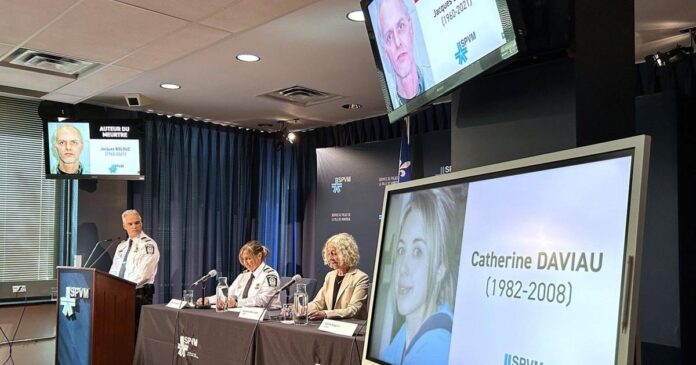

From cold to closed: Advances in DNA analysis helped solve cold cases in 2025. The emergence of new technologies and methodologies in forensic science has breathed new life into old investigations, enabling justice to be served even decades after the crimes were committed. One such case that benefitted from these advancements took place in Montreal, Quebec, where a mother finally got to face her daughter’s killer after 30 years.
Delivering a Message 30 Years in the Making
In a Quebec courtroom last October, Sylvie Desjardins finally had the opportunity to address her daughter’s killer. This moment was 30 years in the making, a testament to the persistence of law enforcement agencies and the power of modern forensic science. The case, once cold and seemingly unsolvable, was reignited thanks to significant advancements in DNA analysis.
The Role of DNA Analysis in Solving Cold Cases
DNA analysis has revolutionized the way cold cases are investigated. It provides a precise and reliable tool that, when combined with conventional investigative methods, can bring clarity to cases that once seemed lost to time. The science of DNA analysis involves extracting genetic material from evidence left at the crime scene and comparing it with the DNA profiles in criminal databases or specific suspects.
From Obscurity to Conviction: The Desjardins Case
The case of Desjardins’ daughter was one such investigation that was reignited by DNA analysis. Initially, despite exhaustive efforts by law enforcement, the killer left no trace, and the case gradually descended into obscurity. However, with the advent of advanced DNA analysis in the mid-2020s, previously untestable evidence was reexamined. The new analysis led to a match with a suspect who was subsequently convicted of the crime.
The Impact of Closure
For families like Desjardins’, the resolution of a cold case brings not only justice but also a sense of closure. After decades of uncertainty and pain, families can finally begin the process of healing. The advancements in DNA analysis, thus, serve not just a legal purpose, but also a deeply human one. They represent hope for countless families waiting for answers, and affirmation of the relentless pursuit of justice.
Advancements Continue: The Future of Cold Case Investigations
As technology continues to advance, so too does the potential for solving more cold cases. New methods of DNA analysis, coupled with the growing ubiquity of genetic databases, promise a future where justice can be delayed but not denied. For families like the Desjardins, and for society at large, these developments signal a new era of justice, where even the coldest cases can be finally closed.
