

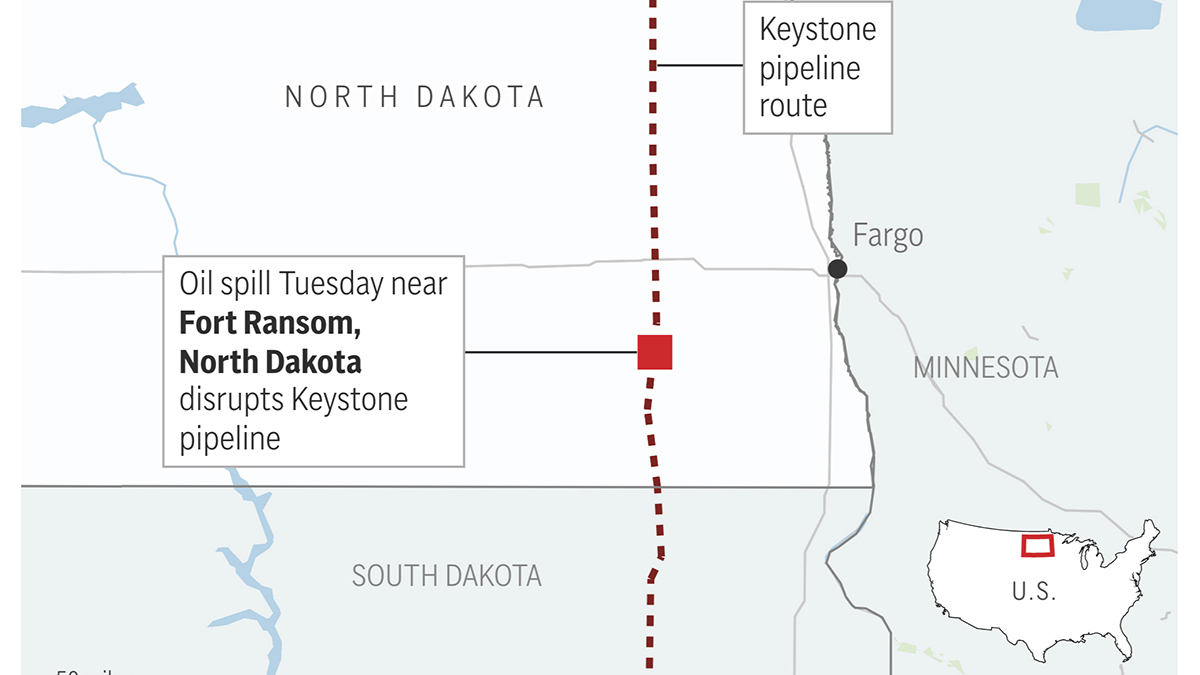

In a recent development, the Keystone oil pipeline, spanning nearly 2,700 miles, was shut down following a rupture in North Dakota. This incident could potentially lead to a rapid surge in gasoline prices in the Midwest, with a more pronounced impact on diesel and jet fuel prices. Consumers may also experience a rise in grocery prices due to the increased costs of diesel, the fuel that powers the trucks responsible for transporting these products.
The Shutdown of Keystone Pipeline
The Keystone oil pipeline, an underground conduit responsible for transporting millions of gallons of crude oil from Canada to the United States, was abruptly shut down on Tuesday morning after it ruptured. The cause of the rupture and the exact amount of crude oil released into the field remains undetermined. However, no human lives or structures were affected by the spillage.
The pipeline, managed by South Bow, a liquid pipeline business, was shut down immediately after the control center leak detection systems noted a drop in system pressure. The spill is contained within an agricultural field situated about 60 miles southwest of Fargo in a rural area.
Impact on Fuel Prices
According to Ramanan Krishnamoorti, vice president for energy and innovation at the University of Houston, the shutdown of the pipeline may lead to a swift rise in gasoline prices in the Midwest. He warns that prices at the pump could increase within one or two days, with a more significant impact on diesel and jet fuel. This is due to the pipeline carrying a unique, heavy crude that is only available from limited sources.
“The refineries run on blends of crude so that they can get the product line that they want to deliver, whether it is gasoline, diesel, jet fuel, etc., and not having the supply of heavy crude is going to tilt their ability to make diesel and jet fuel. They will make less of diesel and jet fuel when they have less of the heavy crude,” explained Krishnamoorti.
Immediate Response to the Rupture
The cause of the rupture remains unclear. However, an employee working near Fort Ransom reported hearing a “mechanical bang” and promptly shut down the pipeline within about two minutes. Emergency personnel responded to the spill, which surfaced about 300 yards south of a pump station in a field.
A Troubled History
Constructed in 2010 at a cost of $5.2 billion, the Keystone pipeline has a history of past ruptures. It carries crude oil across several areas, from Saskatchewan and Manitoba through North Dakota, South Dakota, Nebraska, Kansas, and Missouri, to refineries in Illinois, Oklahoma, and Texas. The pipeline, originally built by TC Energy but managed by South Bow since 2024, has had 13 significant incidents in the 15 years it has been operating.
The Pipeline and Hazardous Materials Safety Administration, responsible for investigating any non-compliance and root cause of the issue post any spill, is yet to comment on the incident.
Story by Raza from Sioux Falls, South Dakota. Contributions by Associated Press writer Josh Funk from Omaha, Nebraska.
