

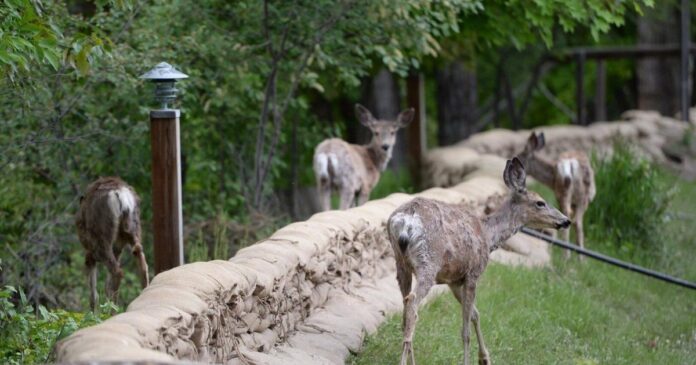

One new case of chronic wasting disease (CWD), a severe neurological affliction that affects deer, has been confirmed in the Kootenay region of British Columbia. This recent detection brings the total number of confirmed instances in the province to nine. The disease, which is fatal to deer, is of significant concern to wildlife officials and conservationists.
Understanding Chronic Wasting Disease
Chronic wasting disease (CWD) is a transmissible spongiform encephalopathy (TSE), a class of diseases also known as prion diseases. It is similar to other TSEs such as mad cow disease in cattle and Creutzfeldt-Jakob disease in humans. CWD affects deer, elk, reindeer, sika deer and moose and is characterized by rapidly progressive weight loss, behavioral changes, and physical deterioration, ultimately leading to death.
Impact on British Columbia’s Deer Population
The new case in the Kootenay region, which is known for its diverse wildlife, marks the ninth instance of CWD in British Columbia. CWD represents a significant threat to the province’s deer population. The disease is highly contagious and can spread rapidly through deer populations. This is a major concern, as deer play a vital role in the region’s ecosystem and are a key part of the local culture and economy.
Efforts to Manage the Disease
Efforts to manage and control the spread of CWD are a priority for local, provincial, and federal agencies in Canada. Measures include enhanced surveillance, testing, and public education about the disease. While there is currently no known cure for CWD, early detection and management strategies can help to slow its spread.
Public Health Implications
According to the Centers for Disease Control and Prevention (CDC), there is no strong evidence that CWD can be transmitted to humans. However, the CDC advises against consuming meat from animals known to be infected with CWD. As a precautionary measure, hunters are advised to avoid shooting or handling deer that appear sick, and to wear gloves when field-dressing deer.
This recent case of CWD in British Columbia’s Kootenay region underscores the ongoing threat the disease poses to wildlife. It also reinforces the importance of continued vigilance and management efforts to protect the province’s deer population and the broader ecosystem.
