

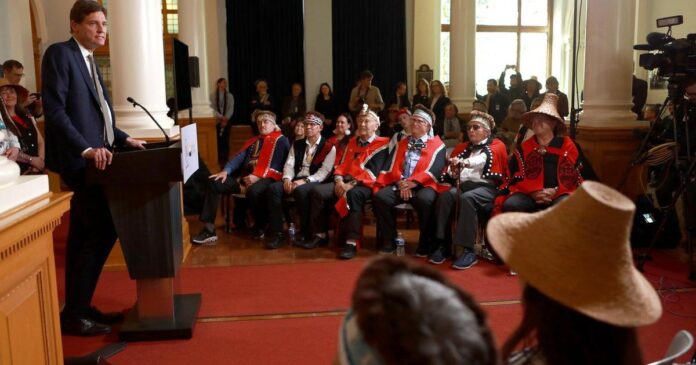

The trust of First Nations is hanging in a delicate balance as the B.C. government contemplates potential changes to the UN law, the Declaration on the Rights of Indigenous Peoples (UNDRIP). Increasing concerns have been voiced by Indigenous leaders, including the chief of a First Nation in the Great Bear Rainforest. They fear these proposed modifications could not only further erode the trust between Indigenous communities and the government, but also inadvertently stoke the flames of racism.
Indigenous Trust at Risk
At the heart of these concerns is B.C. Premier David Eby, whose actions could have significant implications for the relationship between the provincial government and Indigenous people. The chief of a First Nation in the Great Bear Rainforest, who chose to remain anonymous, expressed his apprehension about the potential changes to the UNDRIP. He believes that such actions would risk undermining the trust of Indigenous people, a trust that has already been drastically impacted by historical events.
Potential Breeding Ground for Racism
Furthermore, this First Nation chief warns that changes to the UNDRIP could fuel racism. The UNDRIP is viewed as a vital tool in promoting equality and overcoming the systemic discrimination that Indigenous people have historically faced. Altering the declaration could be perceived as a step back and could potentially create a breeding ground for further discrimination and racism.
The Importance of UNDRIP
UNDRIP is an essential instrument that sets the minimum standards for the survival, dignity, and well-being of Indigenous people worldwide. It acknowledges their right to self-determination and emphasizes the importance of free, prior and informed consent (FPIC) in matters that affect them. Any changes to this crucial document could significantly impact the rights and protections of Indigenous people, hence the growing concern among Indigenous leaders.
Conclusion
In conclusion, the trust of First Nations, already fragile, is being put to the test as the B.C. government contemplates changes to the UNDRIP. Such actions could risk further eroding this trust and could inadvertently fuel racism. It’s a delicate situation that requires careful consideration and consultation, underscoring the importance of maintaining a solid relationship between the government and Indigenous communities.
