

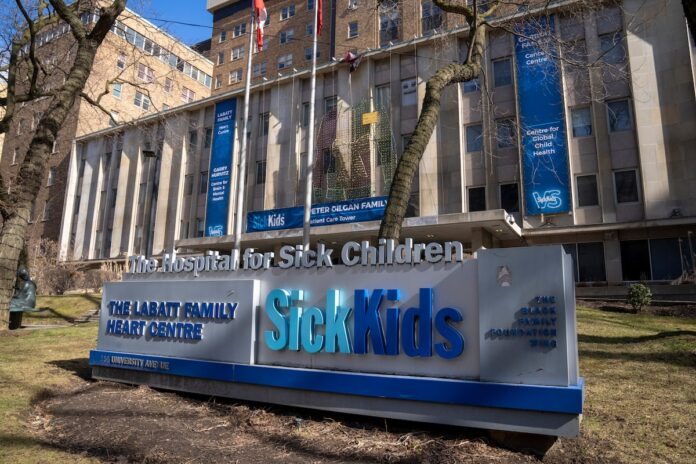

In a significant setback for pediatric cancer research in Canada, at least five advanced clinical trials for childhood cancer have been closed to new Canadian patients. This closure comes as a consequence of the Trump administration’s severe cuts to scientific funding and its directive that grants should no longer be shared with foreign researchers.
The Impact on Toronto’s Hospital for Sick Children
Toronto’s Hospital for Sick Children, also known as SickKids, suspended enrolment in three trials for incurable brain cancer recently. This was a direct result of the U.S. National Cancer Institute’s decision not to renew funding for a consortium of pediatric brain-tumour scientists. SickKids was the only Canadian site in this consortium. The halted trials were exploring novel treatments for children suffering from rare and life-threatening brain tumours. These treatments included a cancer-fighting vaccine and CAR-T therapy, a type of immunotherapy that genetically engineers patients’ own white blood cells to attack their cancer cells.
Head of hematology and oncology at SickKids, Jim Whitlock, expressed his frustration saying, “How frustrating would it be to be a parent who knew that there was a treatment somewhere that could save their child, and not be able to access it because it’s not available in Canada?”
Canadian Pediatric-Cancer Research: A Hard Hit
The Trump administration’s sweeping cuts to the National Institutes of Health and its intent to end sub-grants to foreign researchers has had a particularly harsh impact on pediatric-cancer research in Canada. This is despite the fact that the dollar amounts involved are relatively small. The latest experimental treatments for childhood cancer, which is already a rare condition, are targeted at increasingly specific subtypes of tumours. Canadian scientists are forced to collaborate with U.S. and international researchers to enroll enough children to make such precision medicines studies viable. “It’s like looking for that needle in the haystack,” said Kathy Brodeur-Robb, the executive director of C17 Council, a research network made up of Canada’s pediatric oncology programs.
Uncertain Future of Pediatric Brain Tumor Consortium
In August, the Pediatric Brain Tumor Consortium was informed that its annual grant of about US$4-million would expire in March, after which it would cease to exist. Consequently, the consortium decided to pause new enrolments for six clinical trials, including the three involving participants at SickKids. Neuro-oncologist Vijay Ramaswamy, the principal investigator for the consortium’s SickKids site, said, “The suddenness, I think, is what hit all of us.”
What Happens to Current Patients?
There are currently six Canadian children from across the country enrolled in the CAR-T trial for brain cancer and another three in the study of a vaccine for brain tumours. These children will continue to be monitored in the trials. However, no new Canadian children are allowed to join. Moreover, three other brain-cancer trials that SickKids was preparing to launch this year have been suspended.
The Way Forward
With a sudden stop in U.S. funding and policy shifts, the Canadian pediatric-cancer community is grappling to find a way forward. Dr. Whitlock suggests, “Just as Canada has made a decision that we need to be more self-reliant and invest in submarines and fighter planes and Arctic radar, I think the question on the table is, is Canada going to be self-sufficient in ensuring that its children have access to the best available cancer treatments?”
In the wake of such severe funding cuts, it is clear that Canada will need to strategize for self-sufficiency in pediatric cancer research to ensure its children have access to the best possible treatments.
