

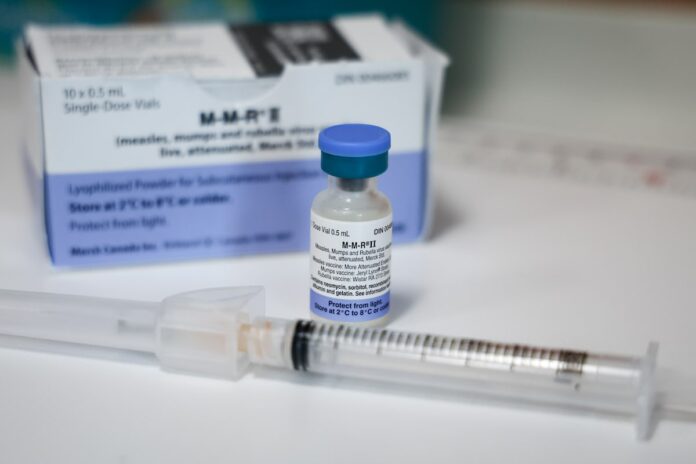
It’s a scientific marvel, so why does the measles vaccine face apathy and anxiety? Despite the measles vaccine saving nearly 94 million lives worldwide over the past 50 years, it continues to be underutilized. In this article, we’ll delve into the history of the measles vaccine, its initial public reception, and the challenges it faces today.
Unfolding the History of the Measles Vaccine
On February 8, 1954, an 11-year-old boy from rural Massachusetts named David Edmonston fell ill with measles. Upon learning about Edmonston’s symptoms, young physician-researcher Thomas Peebles from Boston Children’s Hospital took this opportunity to collect samples from Edmonston. This marked the beginning of a historic breakthrough in the medical world. The virus that causes measles, known as the Edmonston strain, was finally isolated from the blood of an American schoolboy. A decade later, it was harnessed into a vaccine.

The advent of the measles vaccine gave the world a powerful defense against one of the most contagious diseases known to humankind. In the past 50 years, the measles vaccine is estimated to have saved nearly 94 million lives. Furthermore, since the virus only circulates in humans, the emergence of an effective vaccine introduced the possibility of eradicating the disease.
Public Reception and Challenges
Despite the groundbreaking nature of the vaccine, its introduction in 1963 received a relatively muted reaction from the public. This was in stark contrast to the jubilation that followed the announcement of an effective polio vaccine. The public’s understanding of the importance of measles vaccination was limited, and this hindered the vaccine’s success. Many believed that measles was a normal part of childhood and didn’t realize that measles killed more Canadian children annually than polio.
Moreover, the first two licensed vaccines for measles were less than ideal. One, made with a “killed” or inactivated virus, offered inferior protection, while the other caused high fevers and even rash. These issues, along with the relatively high cost, posed significant barriers to widespread vaccination.
The Struggle Towards Measles Elimination
The journey towards eradicating measles hasn’t been smooth. Despite achieving measles elimination in 1998 (meaning it had been free of continuous transmission for more than 12 months), the disease made a comeback following the publication of a fraudulent paper alleging a link between the MMR vaccine and autism. Although the paper was retracted 12 years later, the damage was done and anti-vaccine sentiment had taken root.


The COVID-19 pandemic further complicated the situation by interrupting routine vaccinations, eroding public health care infrastructure, and fueling mistrust against the medical establishment. These conditions have led to a resurgence of measles in countries where it was previously considered eliminated, including Canada and the U.S.
Final Thoughts
In an ideal world, widespread vaccination could eradicate measles, much like smallpox. However, the politicization of vaccines, the spread of misinformation on social media, and skepticism towards the medical establishment pose significant challenges to reaching this goal. As Dr. René Najera, director of public health for the College of Physicians of Philadelphia, puts it, “That’s not where we are.”
