

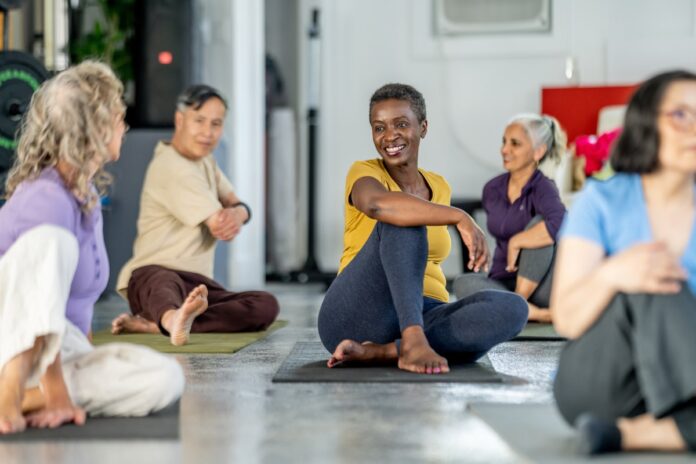

When planning for retirement, don’t neglect physical fitness. The saying “health is wealth” holds true beyond monetary terms and deeply impacts quality of life in one’s golden years. Recent studies confirm that maintaining a regular exercise routine can significantly improve seniors’ health, thus adding not just years to their life, but life to their years.
Moshe Schwartz: A Champion of Senior’s Fitness
One such advocate for senior fitness is Moshe Schwartz, owner, and senior trainer at Gentle Motion, a Toronto-based provider of in-home personal trainers for seniors. Schwartz has seen firsthand the transformative power of regular physical activity among his clients. One of his most notable cases is a client named Gisèle, a former nurse who was suffering from the debilitating effects of fibromyalgia. With Schwartz’s help, Gisèle began a tailored exercise routine that gradually improved her strength and reduced her pain, ultimately leading her to consider herself in remission from fibromyalgia.
Physical Activity: A Key to Healthy Aging
According to Stuart Phillips, a kinesiology professor at McMaster University, regular exercise can preserve muscle mass, support bone health, improve glucose control, and reduce frailty among older adults. This not only improves day-to-day function but also enhances the ability to live independently. Regular physical activity can also ward off chronic diseases such as type 2 diabetes, cardiovascular disease, and some cancers. It also improves balance, reaction time, and neuromuscular control, which can reduce the risk of falls and related injuries.
Phillips emphasizes that maintaining muscle strength is crucial for older adults as it allows them to perform daily tasks independently. He describes exercise as one of the most effective ‘health span-extending’ tools we have.
Exercise: A Behaviour That Can Be Adopted at Any Age
Research conducted by Mabel Ho, a postdoctoral fellow at the Bruyère Health Research Institute, supports the idea that these improvements aren’t solely due to genetics or luck. Rather, they are behaviours that older adults can adopt at any stage of life. Regular exercise is associated with better mood, improved sleep quality, lower smoking rates, increased social participation, and ultimately, more independence. Ho emphasizes that the more regular the activity, the better the outcomes.
Starting Small and Building a Routine
Esme Fuller-Thomson, director of the Institute for Life Course and Aging at the University of Toronto, highlights that maintaining an active lifestyle does not require strenuous activity or a gym membership. Simple exercises such as walking and gardening can improve mood, decrease depression, and help maintain physical strength, mobility, and independence.
Fuller-Thomson recommends starting with just 15 minutes of activity and gradually increasing the duration over time. Having a friend to exercise with can keep you motivated and consistent. She also stresses the importance of consulting healthcare professionals before starting a new routine.
Phillips echoes this sentiment, noting that the key is consistency, not perfection. He assures, “It is never too late to begin, and the benefits start accumulating almost immediately.”
