

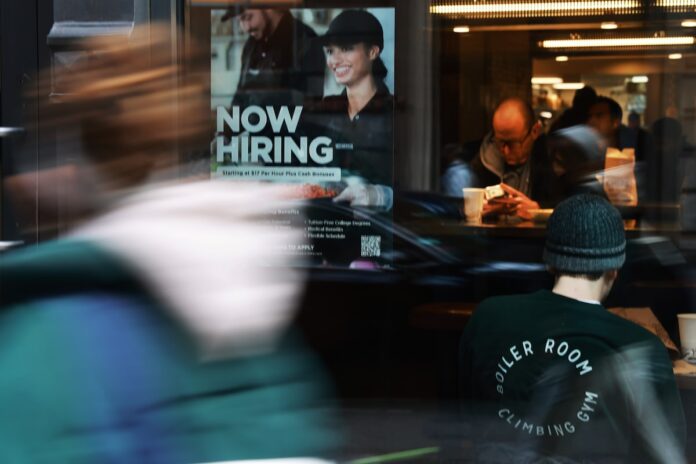

Recent reports on the U.S. job market suggest a weakening labour environment. This perspective, which is expected to be confirmed in upcoming jobs reports, is based on data from the Labor Department’s Bureau of Labor Statistics. The anticipated decline in non-farm payrolls in October, believed to be due to federal government cost-cutting, is expected to rebound in November, with experts predicting an increase of 50,000 jobs. However, this still indicates a gradually weakening labour market.
Effects of Import Tariffs on Hiring
Economists have suggested that the labor market has not deviated much from its recent pattern of slow hiring and gradual increase in unemployment. The reason for this, some argue, is the shock from President Trump’s sweeping import tariffs. This has resulted in increased prices for many goods, leading consumers, particularly those from lower- and middle-income households, to be more selective with their purchases and ultimately reduce their spending. The situation has led businesses to pull back from hiring to cope with the economic shock.
Stall-Speed Hiring Amidst Tariffs
As explained by Brian Bethune, an economics professor at Boston College, “We have a situation where corporations don’t want to hire more people, but there is no wholesale firing that you would see like in a recession. When large businesses get hit with a shock that they didn’t anticipate, one contingency plan is stop hiring, that’s the easiest thing to do.” This sentiment reflects the current state of the U.S. labour market, characterized by what is being referred to as ‘stall-speed hiring’.
Job Openings and Payrolls
Non-farm payrolls likely increased by 50,000 jobs last month, according to a Reuters survey of economists. While there was no consensus estimate provided for October, economists overwhelmingly forecast a decline in payrolls for that month. The anticipated job losses in October are believed to be due to the departure of more than 150,000 federal employees who took deferred buyouts as part of Trump’s push to shrink the government’s footprint.
Federal Reserve Actions
Given the current state of the labour market, Federal Reserve officials have cut the U.S. central bank’s benchmark overnight interest rate by another 25 basis points to the 3.5-per-cent to 3.75-per-cent range. However, they signaled that borrowing costs are unlikely to fall further in the near term as they await clarity on the direction of the labour market and inflation.
Labour Market Weakness and Unemployment
Laboour market weakness is expected to be highlighted by an elevated unemployment rate, forecasted to have been at 4.4 per cent in November. However, it could come in above expectations. Households’ perceptions of the labour market deteriorated in November. While the jobless rate for October will never be known, some economists said it probably jumped from 4.4 per cent in September.
Impact on Wage Growth
Slowing job growth is curbing wage growth, which is seen as a boost to the fight against inflation but a headwind to consumer spending. Average hourly earnings are estimated to have increased 3.6 per cent in the 12 months through November, a decrease from the 3.8 per cent year-on-year growth in September.
