

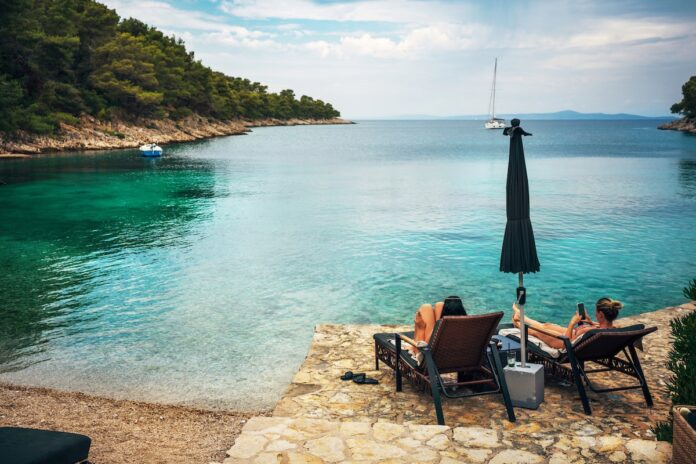

I’m Croatian and heading back to see if I can find a stunning, quiet corner to explore. Croatia, often referred to jokingly as a ’boutique country’ due to its small size and somewhat high cost, has become a fashionable destination in recent years. It boasts a rich history and diverse culture, as well as stunning natural beauty from its countless inlets and bays, mountains, national parks, and more than 1,100 islands. In this article, I will share my experiences exploring the country’s potential for sustainable tourism, balancing preservation with profit, and discovering some of its hidden gems.
Exploring Croatia’s Boutique Potential
Despite being small in size, Croatia has a lot to offer. From its unique and diverse culture to its stunning coastline, its medieval towns, breathtaking islands, and more beaches than you could swim in a lifetime, Croatia is truly a treasure trove. However, the country faces a challenge in balancing the protection of its Adriatic treasures with the monetization of them. The influx of tourists brought by cruise ships puts a strain on the environment and infrastructure, especially in popular destinations such as Dubrovnik and Split.
Discovering Little Green Bay
My exploration of Croatia’s tourism potential led me to the island of Hvar, where I discovered Little Green Bay. This self-proclaimed “non-hotel” is a perfect example of Croatia’s boutique potential. Tucked away in the tiny village of Lozna, it offers visitors a serene and idyllic setting, complete with a crystalline bay as beautiful as any you’d see on a glossy magazine cover. The hotel complex, which consists of a stone farmhouse and three separate stone houses, blends seamlessly into the surrounding landscape. It offers guests a sense of privacy and tranquility, along with attentive service and delicious Dalmatian cuisine.
Experiencing Restaurant Maslina
Another highlight of my trip was a visit to the traditional restaurant Maslina, located in the middle of the island of Hvar. The restaurant is known for maintaining unique Dalmatian culinary traditions, some of which are 150 years old. The menu is simple: small-batch sheep’s cheese, homemade bread and olives, ice cream with figs stewed in prosek, a sweet Dalmatian wine. The olives served here are particularly stunning, as Croatia doesn’t have a culture of preserving and eating olives; only the oil is pressed.
Visiting Palmizana
My journey also took me to Palmizana, one of the Pakleni islands, just off the coast of Hvar. The island is home to the Meneghello Palmizana Restaurant, named after the family that has owned the island since the 19th century. Here, I enjoyed a delicious lunch of mol carpaccio, marinated sardines and anchovies, and gregada, a local stew made with shrimp and fish. The island itself is a sight to behold, with towering cacti, wandering peacocks, bougainvillea, and art everywhere you look. A swim at one of the pebble beaches, just steps away from the restaurant, was the perfect way to end the visit.
Final Thoughts
Croatia certainly has its challenges when it comes to balancing the demands of tourism with the need for preservation. However, my experience has shown me that it’s possible to find quiet corners of this country that offer a sense of peace and tranquility, along with a taste of its unique culture and history. From the stunning views at Little Green Bay to the traditional cuisine at Restaurant Maslina and the unique beauty of Palmizana, Croatia is a country that’s worth exploring.
If you plan to visit, consider booking a direct flight from Toronto to Zagreb with Air Transat, the only Canadian airline offering seasonal flights to Croatia. From there, you can take a connecting flight to Split and board a Jadrolinija ferry for a nearly two-hour ride to Hvar. Once on the island, you can explore Little Green Bay, Restaurant Maslina, and Palmizana at your leisure.
Please note: The writer was a guest of Little Green Bay, Konoba Maslina and Meneghello Palmizana Restaurant. They did not review or approve the story before publication.
