

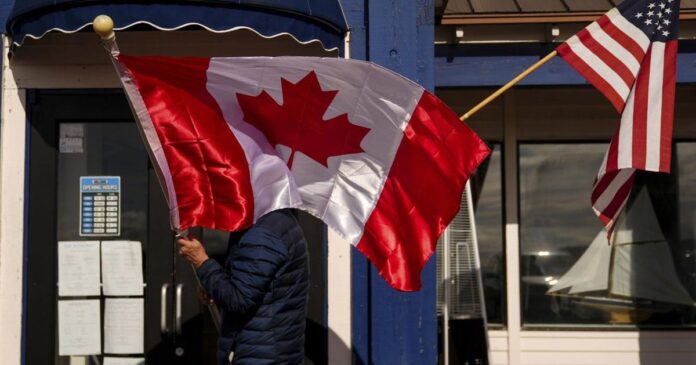

As the global political environment enters an era of increased uncertainty, the Eurasia Group has pointed out that no country is more at risk than Canada in terms of its relations with the U.S. The intricate diplomatic, economic, and social ties between these two countries mean that any shift in their relationship could have wide-ranging impacts. In this article, we will explore some of the key factors that make this relationship so crucial and discuss the potential risks and opportunities for both nations.
Understanding the Canada-U.S. relationship
Canada and the United States of America have a long-standing relationship that both nations greatly benefit from. This relationship extends beyond their shared border and common language, encompassing trade, defense, and cultural ties. According to the Office of the United States Trade Representative, Canada is the U.S.’s second-largest goods trading partner, with $612.4 billion in total goods traded between them in 2019.
Why Canada is at risk
The Eurasia Group’s assertion that Canada is the country most at risk in its relations with the U.S. is grounded in several key factors. Firstly, Canada is heavily reliant on the U.S. for trade. Any significant shift in U.S. trade policy could have a substantial impact on the Canadian economy. Secondly, changes in U.S. immigration policies could impact the flow of people between the two nations. Lastly, any alterations in the U.S.’s approach to global diplomacy could potentially affect Canada’s international relations.
Trade relations between Canada and the U.S.
Trade is a cornerstone of the Canada-U.S. relationship. The two countries have a deeply integrated economic relationship, underpinned by the United States-Mexico-Canada Agreement (USMCA). According to the Canadian government, nearly 75% of Canada’s exports go to the U.S., and about 18% of American exports go to Canada. Any changes in U.S. trade policy could disrupt this balance and have significant economic implications for Canada.
Immigration and social ties
Canada and the U.S. also share strong social ties, with significant numbers of citizens living, working, or studying in the other country. Changes in U.S. immigration policy could impact these ties and potentially lead to a decrease in the exchange of ideas, culture, and talent between the two nations.
Global diplomacy and security
Finally, the U.S.’s approach to global diplomacy and security also has a significant impact on Canada. As a close ally and neighbor, Canada often aligns itself with U.S. foreign policy. Changes in this policy could require Canada to reassess its own diplomatic and security strategies.
Managing the risks
While the risks are real, it is important to note that both Canada and the U.S. have a shared interest in maintaining a strong and stable relationship. By engaging in open and constructive dialogue, the two countries can navigate potential changes in their relationship and work towards mutually beneficial outcomes.
Conclusion
In conclusion, the Canada-U.S. relationship is multifaceted and deeply ingrained. While the Eurasia Group’s assertion highlights the potential risks for Canada, it also underscores the importance of this relationship and the need for both countries to work together to ensure its continued stability and success.
