

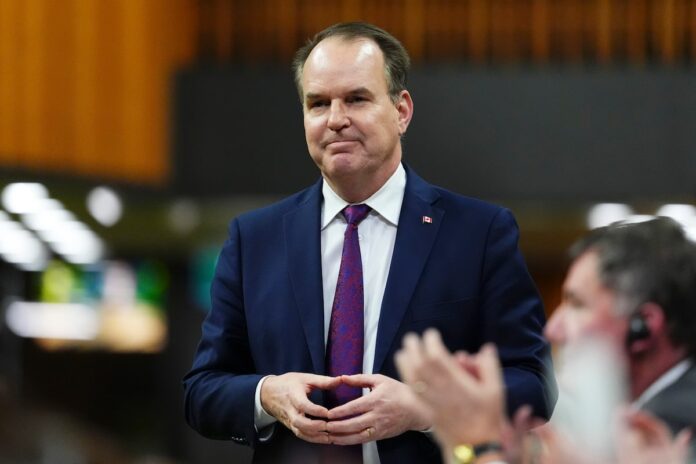

The House of Commons in Canada has commenced its six-week winter break, marking the end of a strenuous period of legislative activity. The government’s extensive budget implementation bill, however, has not yet been passed into law. This break follows an intense session where the government, led by the Minister of Transport and Leader of the Government in the House of Commons, Steven MacKinnon, has strived to protect jobs and combat the cost of living amidst criticism from the opposition.
Government’s Efforts and Opposition’s Critique
MacKinnon, speaking to reporters outside the House of Commons, shed light on the government’s efforts over the past 11 weeks. He criticized the Conservatives for their obstructive political strategy, which he described as self-serving and selfish. Despite these hurdles, MacKinnon asserted that the government had achieved significant results for Canadians and promised to continue their work in the new year.
Legislation Passed in the House of Commons
Before the commencement of the break, the House of Commons passed two pieces of legislation – Bill C-4 and Bill C-12. Both bills are now slated for consideration in the Senate. Bill C-4, in particular, introduces amendments to marginal personal income tax rates, abolishes the consumer carbon price, and implements a temporary GST rebate for first-time homebuyers. Meanwhile, Bill C-12 introduces new measures aimed at empowering the Canada Border Services Agency to tackle issues such as drug and gun smuggling, auto theft, and controversial changes to Canada’s refugee and asylum seeker regimes.
Controversial Changes to Refugee and Asylum Seeker Regimes
The proposed changes to the refugee and asylum seeker regimes have stirred controversy, with NDP MPs Leah Gazan and Jenny Kwan, alongside refugee and human rights advocates, urging the government not to pass the legislation. They argue that these changes constitute an attack on vulnerable populations and could fuel racism without necessarily making the borders safer.
Government’s Progress and Future Plans
Prime Minister Mark Carney, reflecting on the first full sitting since he assumed office, commented that although his government does not hold a majority in the Commons, things are functioning well. He highlighted the passage of the major projects bill in June, indicating a step forward in infrastructure development. However, he expressed the need for more progress, especially in passing pending crime legislation.
Tensions Over Crime Legislation
The Liberals and Conservatives spent much of the past week accusing each other of obstructing crime bills. These include Bill C-9, a hate crimes bill, and Bill C-14, which seeks to impose stricter bail rules for repeat and violent offenders. Another bill, C-16, aims to restore mandatory minimum sentences and introduce new measures to address hateful and controlling behaviour toward women and shield children from online predators.
Accusations and Counteraccusations
Conservative House leader Andrew Scheer accused the Liberals of delaying their own legislative agenda and failing to address affordability concerns. He criticized the Liberals for resorting to procedural tricks and games that have stalled their own agenda. In response, MacKinnon accused the Conservatives of acting as a barrier to getting legislation passed, including Bill C-4.
Progress on the Budget
The Liberal budget passed the House of Commons in November, surviving a confidence vote with the support of Green Party Leader Elizabeth May and the abstention of two NDP and two Conservative MPs. The bill to implement parts of this budget passed the second reading on Wednesday and will be examined in committee in the new year.
