

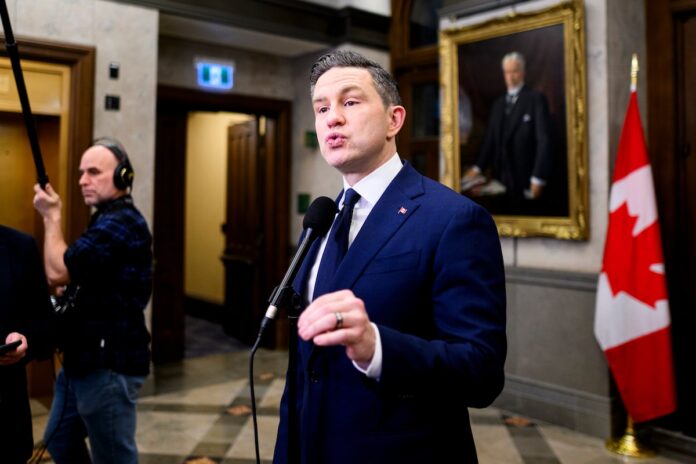

In a surprising end to the fall parliamentary session in Canada, Parliament wrapped up for its holiday break after the Liberals and Tories reached an agreement to move forward with a number of bills that had been causing an impasse. The minority Liberal government and opposition parties had been clashing over these bills in committees and on the floor of the House of Commons, leading to heated exchanges. However, the agreement reached on Thursday allows for the progression of these bills, marking a significant step in the legislative process.
Key Bills Advance Towards Becoming Law
Before Parliament adjourned on Thursday, several bills were agreed upon to advance towards becoming law. This includes a flagship border-security bill that tightens immigration and asylum rules, along with a tax bill that confirms existing tax breaks. Both these bills cleared the House entirely on Thursday and were sent off to the Senate. Additionally, a bill on approving funding for the federal civil service received royal assent in the Senate before senators adjourned for the holidays until early February.
Contentious Debate on Religious Freedom and Hate Speech
In the final days of the parliamentary sitting, MPs on the justice committee sparred over a bill combatting hate, which the Conservatives asserted could threaten freedom of religious expression. Liberal and Bloc Québécois MPs on the committee had voted to remove a long-standing religious exemption to Canada’s hate-speech laws, a move that was met with criticism from the Conservatives. This exemption to the Criminal Code currently allows a person who quotes from a religious text to escape prosecution for hate speech.
Political Implications of the Bills
Conservative Leader Pierre Poilievre accused the Liberals of blocking repeated attempts by his party to move forward to the bail bill, adding his voice to the parliamentary squabble. In response, Government House Leader Mark MacKinnon blamed the Conservatives for using obstructionist tactics in Parliament to hold up government bills. He accused the Tories of pursuing a “self-serving and selfish” strategy whose aim is to “obstruct, obstruct, obstruct.”
Productive Session or Lackluster Progress?
Before the parliamentary break, Mr. MacKinnon asserted that it had “been an incredibly productive session” with a number of government bills, including those to protect victims of crime, being introduced. However, Kennedy Stewart, of Simon Fraser University’s School of Public Policy, countered that the fall sitting has not been as fruitful as claimed. He stated, “For all the chatter and hullabaloo, not much got done and Canada is pretty well in the same place it was when the session began.”
Future Legislative Landscape
With the election held earlier this year, MPs have spent far fewer days than usual in the House of Commons. They are scheduled to return to Ottawa on January 26. On the last day before the parliamentary break, the Conservatives supported sending the government’s border-security bill, known as Bill C-12, to the Senate. This marks a significant step in resolving the legislative impasse, and it remains to be seen how these and other bills will fare when Parliament resumes.
