


Liberals vote against Tory pipeline motion, calling it cheap stunt
Conservative Leader Pierre Poilievre’s effort to get the House of Commons to vote in support of a new oil pipeline failed after Liberals refused to back an endeavor they described as a divisive political stunt. Though Mr. Poilievre tried to amend his motion in response to criticism that it was too narrow, both the amendment and the main motion were defeated in a vote Tuesday evening.
Conservative Motion for New Oil Pipeline Support Defeated
The motion had originally called on the House of Commons to take note of the new memorandum of understanding signed between the federal government and Alberta on Nov. 27, in which Ottawa pledged support for a privately built pipeline if certain conditions were met. Mr. Poilievre’s motion called on MPs to declare their support for the pipeline, along with a lifting of the oil tanker ban on British Columbia’s north coast, while respecting the government’s duty to consult with Indigenous peoples.
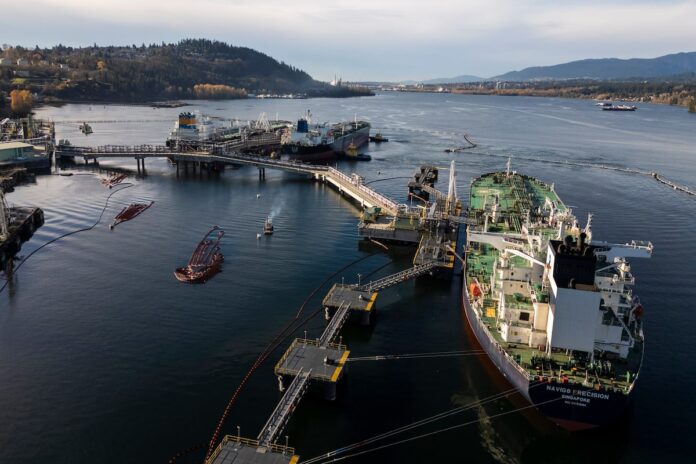
Crude oil tankers docked at the Westridge Marine Terminal in Burnaby, B.C., in November. The Conservatives are calling for a vote that asks MPs to signal their support for a pipeline enabling the export of Alberta bitumen from a B.C. port.
Jimmy Jeong/The Globe and Mail
Controversy Surrounding Energy Deal
The energy deal won both Prime Minister Mark Carney and Alberta Premier Danielle Smith standing ovations in Alberta. But it infuriated the B.C. government and First Nations, who felt they should have been at the table. It also unsettled some Liberals, who have argued it overrides previous government commitments to fight climate change.
Prime Minister Mark Carney, right, signs a memorandum of understanding with Alberta Premier Danielle Smith in Calgary in late November.
Jeff McIntosh/The Canadian Press
Political Backlash and Response
By his own description, Mr. Poilievre’s motion had been designed to force the Liberals to take a firm position in support of the pipeline. He accused them Tuesday of playing both sides of the issue. But Liberals said his motion deliberately distorted the agreement by leaving out key elements such as the role B.C. and Indigenous communities must play, Alberta’s commitment to industrial carbon pricing and other measures.
Natural Resources Minister Tim Hodgson called the motion a “cynical ploy to divide us.” “It’s a cheap political stunt,” he told reporters.
Mr. Poilievre tried to broaden the motion to add references to carbon capture and storage as well as the roles of B.C. and Indigenous peoples. “We are removing all the Liberal excuses because we know what the Prime Minister’s plan is,” he said during debate in the Commons. “He wants to pretend that he supports a pipeline like the majority of Canadians just long enough to get through the next election.”
The amendment did not include a reference to the MOU’s provisions on industrial carbon pricing – a program Mr. Poilievre has promised to eliminate if he forms government. During Question Period, Mr. Carney pushed back on Mr. Poilievre for not supporting all of what Alberta had agreed to, and said that if the Conservative Leader did support it, he would have included the entirety of the MOU in the motion.
The NDP and Bloc Québécois had said earlier Tuesday they would vote against the motion. Interim NDP Leader Don Davies – who called the pipeline bad for the country – said that given the Conservatives’ mid-debate amendments, the motion amounted to a political game.
More than half of Canadians support new pipeline from Alberta to B.C., Nanos poll finds
Concerns have been raised within the Liberal caucus about the scope of the accord, as it also lifts the oil and gas emissions cap, suspends clean electricity regulations and provides for an exemption to the oil tanker ban. One Liberal, Steven Guilbeault, quit his job as culture minister over the deal, and other Liberal MPs have said they will be watching closely to see how the government implements the agreement.
But earlier Tuesday, Liberal MP Corey Hogan said the motion was designed as a trap. “There is a risk in voting yes and there is a risk in voting no,” he told reporters. “If the Liberals vote yes, it looks like the government is undermining the rights of Indigenous peoples, conversations with B.C. and the rest of the environmental measures in the deal, he said. “If we vote no, well, it’s designed to look like we don’t support the pipeline, and we do support the pipeline.”
