

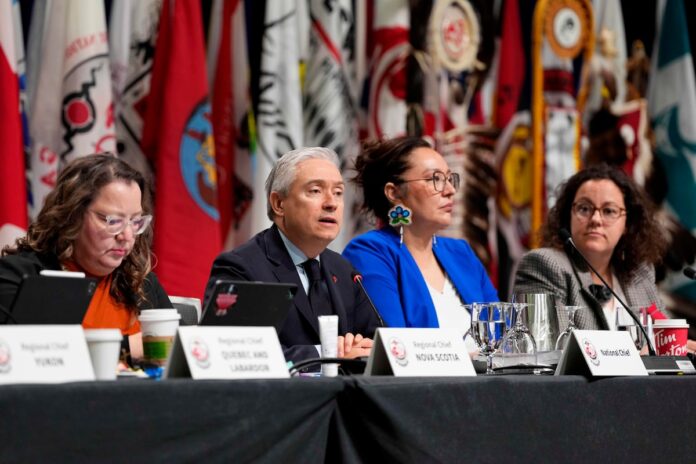

Ministers take questions from AFN chiefs in an attempt to improve relationship:
Seven federal ministers, including Finance Minister François-Philippe Champagne, engaged with the Assembly of First Nations on Thursday, addressing concerns from chiefs in a bid to strengthen a relationship that has faced challenges due to the government’s focus on major projects and a recent agreement with Alberta regarding a potential pipeline.
Among the ministers present was Energy and Natural Resources Minister Tim Hodgson, who, despite initially being scheduled to address the chiefs directly, instead held meetings with Indigenous leaders offstage. This change in plans was attributed to a reshuffling of the event’s agenda by government organizers, according to Hodgson’s spokesperson, Carolyn Svonkin.
During the gathering, Minister Hodgson met with chiefs from British Columbia and Treaty 6, engaging in one-on-one conversations to address concerns and foster dialogue.
AFN National Chief Cindy Woodhouse Nepinak highlighted the record number of cabinet ministers in attendance, emphasizing that all voices are valued and welcomed within the assembly.
Recent tensions arose following the adoption of an emergency resolution by the AFN, calling for the immediate withdrawal of a memorandum of understanding between Ottawa and Alberta regarding a potential pipeline project. This resolution also rejected proposed exemptions to the federal ban on oil tankers off the northern coast of British Columbia, a stance supported by Coastal First Nations.
Additionally, concerns have been raised by some First Nations regarding the government’s infrastructure plans potentially infringing upon treaty rights. The passing of Bill C-5 in June, which established a mechanism to expedite projects deemed in the national interest, has further fueled apprehensions within Indigenous communities.
Prime Minister Mark Carney, in his address to the assembly, emphasized the need for collaborative partnerships with First Nations in advancing major projects. He pledged to convene a federal-provincial-territorial meeting with Indigenous representatives early next year and committed to introducing long-awaited legislation on First Nations clean drinking water in the upcoming spring session.
Despite these assurances, AFN National Chief Woodhouse Nepinak expressed dissatisfaction with the timeline for the clean water legislation, urging prompt action from the government.
During the ministerial panels, discussions centered on various topics, including budget allocations, health, housing, public safety, and infrastructure. Ministers highlighted initiatives aimed at benefiting Indigenous communities and fielded questions from chiefs on a range of issues.
Notably, Indigenous Services Minister Mandy Gull-Masty, Crown-Indigenous Relations Minister Rebecca Alty, and Finance Minister François-Philippe Champagne addressed the chiefs, outlining government initiatives and engaging in dialogue to address community concerns.
Ms. Gull-Masty announced forthcoming changes to Jordan’s Principle, a policy ensuring essential services for First Nations children. These adjustments come in response to challenges faced by some communities in accessing support under the program.
Overall, the engagement between federal ministers and AFN chiefs signifies a commitment to fostering constructive dialogue and addressing pressing issues affecting Indigenous communities across Canada.
