

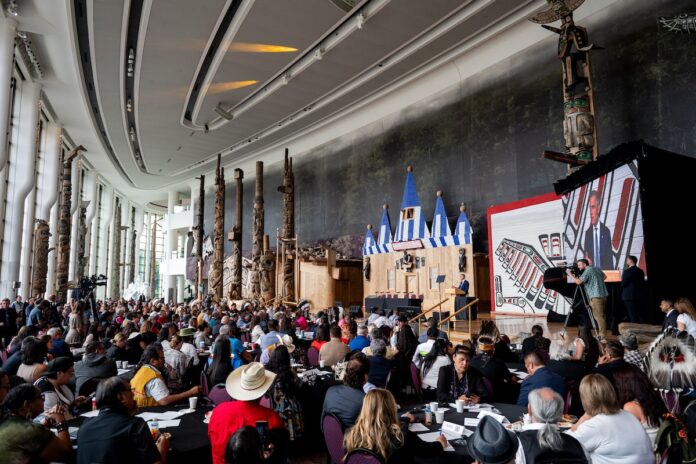

In a recent development, it has been revealed that Ottawa’s Indigenous advisers were not informed about the Alberta pipeline agreement. Grand Chief Trevor Mercredi of Treaty 8 First Nations in Alberta expressed his concerns during a news conference.
Surprising Revelation by Indigenous Leaders
According to Trevor Mercredi, a member of the Indigenous advisory council of the Major Projects Office, the federal government did not inform him and his colleagues about the agreement signed with Alberta which paves a path towards a pipeline to B.C.’s coast. He added that the announcement came as “news” to him and his colleagues, and Prime Minister Mark Carney’s government did not consult the council for advice on how to proceed. He voiced his worry about the announcements being made without involving the nations of Treaty 8.
Major Projects Office and Indigenous Leaders
The Major Projects Office, which is the outcome of a bill passed in the summer, aims to expedite approvals for major projects to boost the Canadian economy. However, it faced heavy criticism from Indigenous leaders for being developed and passed without their input. Following the backlash, the Indigenous advisory council was incorporated into the office to include Indigenous leaders in the process and address their concerns.
Need for Trust and Collaboration
Grand Chief Mercredi, who had spoken against the legislation during a meeting between First Nations chiefs and the federal government in July, was appointed to join the council along with 10 other members. During that meeting, he had stated that Carney had a “big job to do” to regain the trust of First Nations leaders. The federal government has since said the council would work with Indigenous Peoples to incorporate the United Nations Declaration on the Rights of Indigenous Peoples into government decision-making on major projects.
Call for Direct Communication
Mercredi emphasized that he and his colleagues learned of the pipeline agreement at the same time as the public. He further stated that they had not been made aware of the discussions between the federal government and Alberta. He urged the federal government to communicate directly with affected First Nations before making announcements on major projects.
Government’s Response
A spokesperson for the Privy Council Office stated that both Canada and Alberta are committed to respecting Aboriginal and Treaty rights, and to engaging in meaningful consultation that honors the rights and cultures of Indigenous Peoples. The spokesperson further stated that any projects referred to the Major Projects Office would involve consultations with Indigenous Peoples, informed by the Indigenous Advisory Council.
First Nations’ Stance
Despite the government’s reassurances, Indigenous leaders remain skeptical. Chief Sheldon Sunshine of Sturgeon Lake Cree Nation warned that without genuine consultation, the Major Projects Office would only fast-track the “demise” of his people. He emphasized the need for consultation, participation, and inclusion before any development takes place. Furthermore, Grand Chief Mercredi stated that Treaty 8 First Nations are not stakeholders but rights-holders with sovereignty, jurisdiction, and authority over their lands and waters. He warned that any attempts at development without proper consultation will result in immediate action, including court action.
Indigenous Rights and the MOU
The agreement between Ottawa and Alberta commits the two governments to work towards building an oil pipeline to the West Coast – a move that could potentially alter the coastal tanker ban. The agreement states that Ottawa’s commitment is contingent on the pipeline being approved as a project of national interest, and on the project providing “opportunities for Indigenous co-ownership and shared economic benefits”. However, at an Assembly of First Nations special assembly, chiefs voted unanimously to reject the agreement and to urge the federal government to uphold the coastal tanker ban.
