
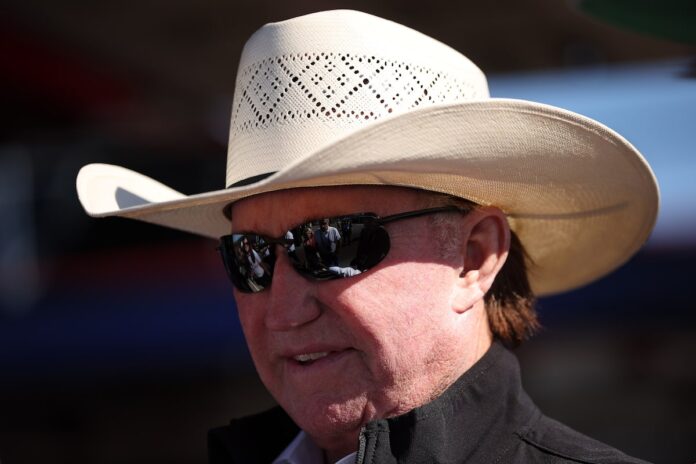

Team owner Richard Childress, a renowned figure in the NASCAR industry, recently testified in the ongoing federal antitrust lawsuit involving Michael Jordan against NASCAR. Childress disclosed that he was compelled to sign the 2025 revenue sharing model, as refusing to do so would have caused his racing team, Richard Childress Racing, to go out of business.
Childress’ Testimony
During his testimony, Childress, who has been a part of NASCAR for over six decades and is a six-time championship-winning owner, highlighted the financial constraints faced by his team. He stated, “I would not have signed those charters if I was financially able to do what I do. We are a blue-collar operation.”
Childress also revealed his longstanding relationship with the France family, founders of NASCAR, and his unsuccessful attempts at persuading chairman Jim France to make charters permanent rather than renewable.
Charters and Its Impact
The charter system, first implemented in 2016, brought considerable value to Childress’ team, despite falling short of its financial potential if the charters were permanent. He argued that the charters need to be permanent for the teams to realize their full financial potential.
He admitted to only accepting the offer in 2024 when Hendrick Motorsports announced they were signing, stating, “all I know is financially we would be out of business” if he did not follow suit.
NASCAR’s Stance
On the other hand, Steve Phelps, the commissioner of NASCAR, testified about the challenging years of negotiation on the new revenue sharing model with teams. Phelps disclosed that Jordan’s financial adviser, Curtis Polk, was the lead representative for the teams and was steadfast in their demand for increased revenue, permanent charters, a voice in governance, and a third of any new revenue streams.
Phelps also mentioned that the deal presented to the teams in 2024 did not include permanent charters or a voice in governance. The only two teams out of 15 organizations to refuse to sign were 23XI Racing, co-owned by Jordan, Polk, and three-time Daytona 500 winner Denny Hamlin, and Front Row Motorsports, owned by Bob Jenkins.
Revenue and Future Prospects
Phelps defended NASCAR’s stance by stating that the teams’ initial request for US$720-million in guaranteed annual revenue would have put NASCAR out of business. Despite the long and taxing negotiations, Phelps believed that the final agreement was “a fair deal” even though it did not meet all the teams’ demands.
The trial continues to unfold, shedding light on the inner workings and financial aspects of NASCAR and the teams involved. The outcome of this lawsuit could potentially have a significant impact on NASCAR’s future revenue model and the relationship between the organization and its teams.
