

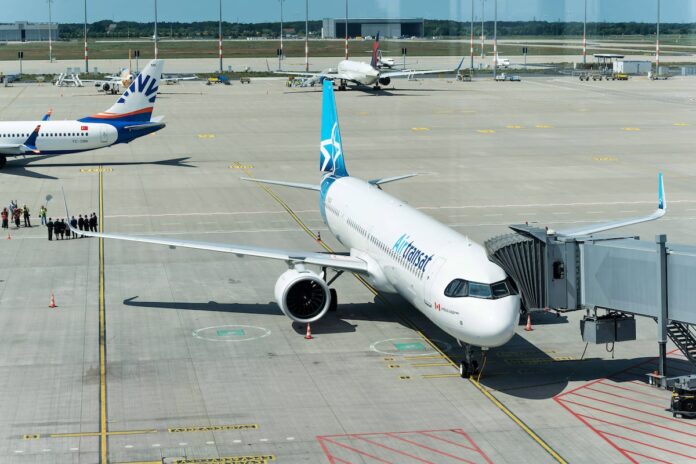

Air Transat, a Montreal-based carrier, is on the brink of a significant shift in its wage structure, with its pilots due to vote on a contract proposal that could see their pay increase by up to 67% over the next five years. This follows a decade-old deal and is expected to align the airline’s remuneration package with industry standards in Canada. The agreement was reached just in time to prevent a strike deadline set by the Air Line Pilots’ Association.
Details of the Proposed Contract
According to information obtained by The Globe and Mail, the proposed contract, which requires majority approval, is set to offer Air Transat pilots pay raises between 49% and 67% over five years. The contract is to be presented to the 750 pilots next week and ratification will follow.
Should the agreement be approved, the most senior captains could be earning about $387,000 a year by 2029, while a senior first officer would make $238,000 annually. The tentative contract also includes improved rules on fatigue management and quality of life, and a faster track to the highest-paid cockpit positions.
Response from Air Transat and Union
Air Transat spokesperson, Alex-Anne Carrier, deferred questions regarding the contract details to the union. The union stated that it would not disclose the contract’s details until they have been presented and explained to the members. Bradley Small, the head of the union at Air Transat, said in a statement that the proposal provides better job security, compensation, and work-life balance.
Carrier also added that the proposed deal is beneficial for both sides, as it allows pilots to catch up with wage gains at other airlines, while ensuring efficiency and productivity improvements for the company.
Expert Opinion on Pilot Remuneration
Geraint Harvey, a Western University professor who researches airline labour, argues that the high pay for pilots is justified due to the intensive training, tough schedules, and the stressful, safety-sensitive nature of their work. He also pointed out that despite flying the same planes, pilots in Canada are paid less than their counterparts in the United States and Europe due to the smaller market in Canada.
Proposed Pay Raises
Under the new proposal, Air Transat classifies its pilots into two categories: first officer and captain. Each category has seniority rankings based on years of service. If the contract is approved, pilots will work a minimum of 75 hours a month, down from the previous 80 hours.
In the first year of the contract, a newly hired first officer will see an hourly wage increase of 37% to $94. By 2029, the most junior first officer will be earning $114 an hour, representing a 67% increase from the previous contract. Similarly, first-year captains will receive a raise of 26% in the first year to $245 an hour. By 2029, they will be earning $298 an hour, a 53% increase over the life of the contract.
A captain with 11 years of service will get a raise of 23% in the first year to $329 an hour. By the end of the contract, they will be making $400 an hour, a 49% increase. For the top-ranked captains with 14 years of service, they will earn $354 an hour in the first year and $430 by 2029.
