

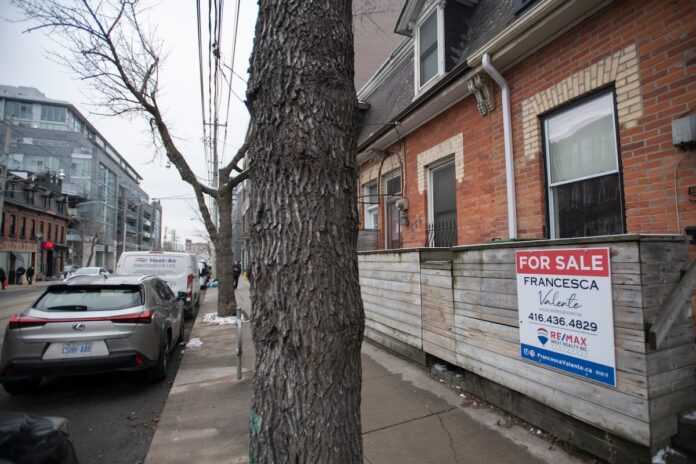

Canadian home sales and prices continued to decline in November as buyers remained on the sidelines, reflecting a slump in the residential real estate market. Sellers were compelled to offer discounts to move properties, resulting in an overall drop in average housing prices. This downturn has prompted real estate experts to postpone their projections of a market recovery to the spring of 2026, when stable mortgage rates are more likely to entice buyers back into the market.
A Closer Look at the Market Decline
According to data from the Canada Real Estate Association (CREA), national home sales experienced a 10.7% decline in comparison to last November, with a 0.6% drop occurring month-over-month. The average national home price also fell by 3.8% compared to last November, settling at $674,800. The steepest price declines were registered in Vancouver, Toronto, and Ontario’s industrial hubs of Kitchener, Woodstock, and London.
GTA Home Sales and Pricing
In the Greater Toronto Area (GTA), home sales were down nearly 16% in November, with prices and new listings also falling. Sellers were making concessions on home prices to complete transactions before year-end, according to CREA’s senior economist Shaun Cathcart. Despite earlier forecasts that 2025 would see a revival in housing markets due to changes in interest rates, these predictions have not come to fruition.
The Current State of the Canadian Real Estate Market
The number of homes sold in Canada decreased by 1.8% in the first 11 months of 2025 compared to the same period last year, while the average national home price was down by 1.1%. CREA chair Valérie Paquin stated that with lower interest rates due to a softer economy, all eyes are now on spring 2026 for a potential return to more usual levels of housing activity.
New Home Listings and Market Balance
The number of new homes listed for sale decreased by 1.6% in November compared to the previous month. The sales-to-new-listings ratio was 52.7%, which CREA stated is indicative of balanced housing market conditions. By the end of November, there were 173,000 properties listed for sale across Canada, representing an 8.5% increase from last November but down 2.5% from the long-term average for this time of year.
Looking Ahead
As we move into 2026, real estate experts suggest that a stable outlook for mortgage rates will likely attract more homebuyers into the market. In 2025, the Bank of Canada reduced its target for the overnight lending rate four times, bringing it down to its current level of 2.25%. This rate is expected to remain steady through the first half of 2026.
Market Fundamentals and Future Predictions
“Solid market fundamentals – including lower interest rates, increased supply, and reduced competition – have created a more favourable environment for consumers,” said Royal LePage CEO Phil Soper. With the current five-year variable rate mortgages matching the lowest levels since spring 2022, buyers can proceed without worrying about missing out on lower rates in the future.
The Impact of Rate Stimulus
Despite a lackluster year for Canadian real estate, with stagnant sales and price growth, the end of rate stimulus may create a sense of urgency in the market. Penelope Graham, a mortgage expert at Ratehub.ca, suggests that motivated buyers may take action while rates are still relatively low. For 2026, Royal Lepage predicts a slight increase in the median price of single-family detached homes and a decrease in condominium prices.
Projected Market Hotspots
Royal Lepage anticipates that Quebec City, Montreal, and Regina will be the country’s hottest real estate markets in 2026, with home prices projected to rise by 5 to 12%. Conversely, home prices are expected to continue falling in Toronto and Vancouver, the country’s two most expensive markets.
