

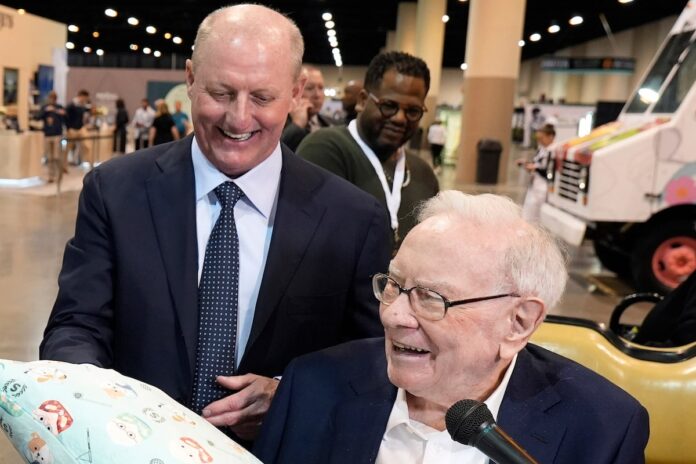

As the year 2023 beckons, the world’s most venerated investor, Warren Buffett, is preparing to pass the baton of his mighty conglomerate, Berkshire Hathaway, to vice chairman Greg Abel. The transition, set for January, has been in the cards for nearly five years, with Abel serving as the CEO-designate. However, “Buffett set to hand Berkshire reins to Abel, who has a tough act to follow,” is a sentiment echoed by many investors as they grapple with the reality that Buffett’s larger-than-life aura, which significantly influences Berkshire’s stock price, will inevitably fade.
Abel: A Tough Act to Follow
Greg Abel is poised to take over as CEO from the legendary Warren Buffett on January 1. For the 63-year-old Abel, it is undoubtedly one of the toughest acts to follow in corporate history. Buffett, 95, has successfully helmed Berkshire since 1965 and will continue to serve as its chairman.
Lawrence Cunningham, a George Washington University law professor and author of several books on Buffett and Berkshire, said, “There is a huge halo effect (from Buffett).” According to Cunningham, Abel’s primary challenge will be to convince skeptics that Berkshire can continue to thrive. This will be without Buffett making the final decisions on which companies and stocks to buy, or providing guidance and wisdom in annual shareholder letters and meetings.
Management Reshuffle at Berkshire
In anticipation of this transition, Berkshire has already initiated a management reshuffle. Abel will delegate direct oversight of Berkshire’s 32 consumer products, service, and retailing businesses to Adam Johnson, who will simultaneously continue running the NetJets luxury plane unit. In a significant move, Berkshire has elevated Nancy Pierce to run Geico, replacing Todd Combs, who will join JPMorgan Chase.
Modernization at Berkshire
Abel’s strategy appears to be a mix of continuity and modernization. Michael Ashley Schulman, chief investment officer at Running Point Capital, noted that Abel is positioning “trusted lieutenants and fresh talent to balance continuity with modernization at Berkshire.” Abel’s hands-on approach marks a departure from Buffett’s management style and is likely to result in a more traditional corporate path, including potentially paying dividends.
Berkshire’s Future
Even as Berkshire Hathaway prepares for this significant transition, it is essential to remember the company’s remarkable journey. Buffett transformed Berkshire from a failing textile company into a $1.07-trillion conglomerate. Its close to 200 businesses, including the BNSF railroad, Geico car insurance, Berkshire Hathaway Energy, and retail brands such as Brooks and Duracell, make it a reasonable proxy for the U.S. economy.
Abel’s Challenges and Shareholder Expectations
While Berkshire’s stock has soared nearly 6 million percent since 1965, in recent years, its performance has been similar to or lagged behind the Standard & Poor’s 500. Abel’s challenge will be to navigate this reality while managing a conglomerate armed with $381.7 billion in cash. Shareholders are realistic about future returns, with many expressing satisfaction if Abel can deliver an 8 to 10 percent annual return.
Demands for Changes and Transparency
As Abel steps into his new role, he may face calls for greater transparency in Berkshire’s disclosures, which many analysts find impenetrable or incomplete. Some investors are also urging for dividends and a more articulated capital allocation strategy, marking a clear departure from Berkshire’s historical approach.
Maintaining Berkshire’s Unique Culture
Despite these calls for change, a significant section of shareholders wants to see Berkshire maintain its unique culture. Steve Check, president of Check Capital Management, emphasized, “We don’t want to change Berkshire’s culture.”
As Buffett prepares to pass the torch to Abel, the world watches in anticipation. With Buffett’s influence still looming large, the transition may not be seamless. However, as Cunningham noted, “Greg will have a little bit of a runway,” indicating that Abel has the opportunity to lead Berkshire into its next phase of evolution.
