

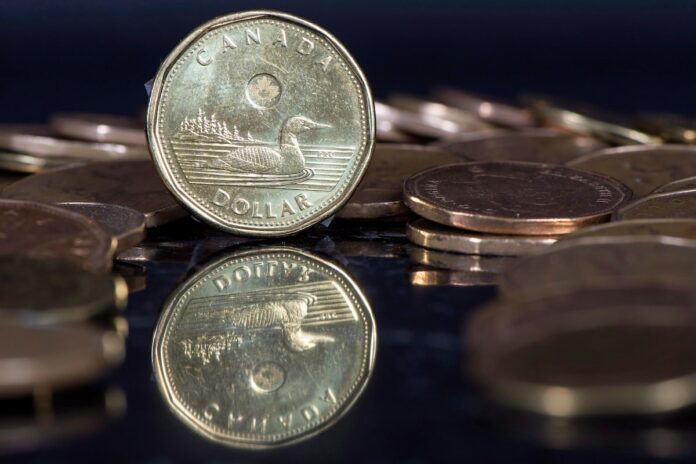

The Canadian dollar notches 2-1/2 month high after Fed, BoC rate decisions. The Loonie, as the Canadian dollar is colloquially known, gained strength against its U.S. counterpart following the Bank of Canada’s decision to hold interest rates steady and the Federal Reserve’s decision to continue its easing campaign, which put pressure on the greenback.
Loonie Strengthens Against U.S. Dollar
On Wednesday, the Loonie was trading 0.4% higher at 1.3795 per U.S. dollar, or 72.49 U.S. cents. This represents its strongest intraday level since September 22, when it traded at 1.3785. The rise in the Canadian dollar comes even as the U.S. dollar fell against a basket of major currencies after the Federal Reserve lowered interest rates in a widely expected move.
Federal Reserve’s Easing Campaign
Chicago Fed President Austan Goolsbee and Kansas City Fed President Jeffrey Schmid argued that the policy rate should be left unchanged. “Markets had feared a more profound divergence would be on display, given that the October meeting minutes showed considerable differences of opinion among the various voting members,” said Karl Schamotta, chief market strategist at Corpay.
Bank of Canada Holds Rates Steady
Meanwhile, the Bank of Canada moved to the sidelines as expected, after it cut its benchmark rate to a three-year low of 2.25% in October. Governor Tiff Macklem stated that the economy was proving resilient overall to the effect of U.S. trade measures, though uncertainty remains high. “For CAD to continue to outperform peers you would need some USMCA/trade uncertainty resolution which is harder to see in the imminent horizon,” noted strategists at TD Securities, including Jayati Bharadwaj.
U.S.-Canada Trade Relations
Recent talks for a trade deal in key sectors between the U.S. and Canada have broken down. The United States-Mexico-Canada Agreement, which has shielded much of Canada’s exports from U.S. tariffs, is up for joint review in 2026. U.S. Trade Representative Jamieson Greer suggested that it made sense to discuss trade issues separately with Canada and Mexico given differences in trade relationships with both neighbors.
Impact on Canadian Oil Exports
As one of Canada’s major exports, the price of oil also plays a significant role in the valuation of the Canadian dollar. Oil prices settled 0.4% higher at $58.46 a barrel after U.S. officials announced the seizure of an oil tanker off the coast of Venezuela.
Canadian Bond Yields
Canadian bond yields moved lower across the curve, tracking moves in U.S. Treasuries. The 10-year Canadian bond yield was down 4.4 basis points at 3.428%.
In conclusion, the Canadian dollar’s strength against the U.S. dollar is influenced by a variety of factors including decisions by the Bank of Canada and the U.S. Federal Reserve, trade relations, and oil prices. As these elements continue to evolve, so too will the relative performance of the Loonie.
