

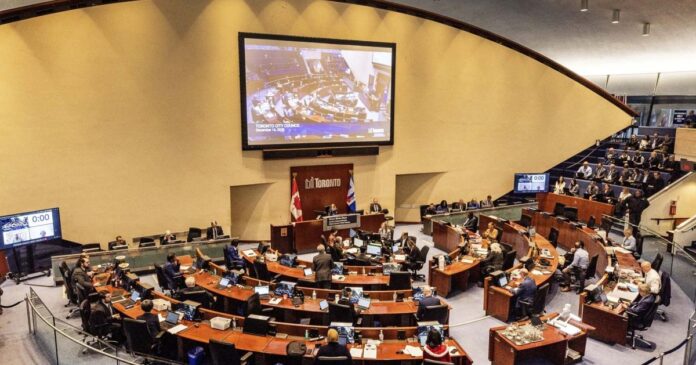

The recent announcement made by the Toronto City Council has stirred up substantial conversation among residents and investors alike. The council has approved a proposal by Olivia Chow for a ‘luxury’ land transfer tax hike, under the premise that those who can afford luxury properties should be able to handle the increased tax. “They can afford it,” were the words used to justify this significant decision.
Understanding the Luxury Land Transfer Tax Hike
The ‘luxury’ land transfer tax hike is a move aimed at properties in the higher price bracket. Essentially, a land transfer tax is a fee paid by the buyer of a property to the government and varies based on the purchase price of the property. With this proposed hike, luxury properties will see an increase in this tax, thereby generating additional revenue for the government.
Implications for Property Owners
While this decision has been justified with the belief that luxury property owners can afford the hike, it’s essential to consider the broader implications. The tax hike could potentially deter foreign investors and impact the real estate market in Toronto. However, some argue that the increased revenue could be used to fund public services and infrastructure, thereby benefiting the community at large.
Public Response and Future Expectations
Public response to this decision has been mixed. Some agree with Chow’s assertion that those who can afford high-end real estate can handle the tax hike. Others fear it may discourage investment in Toronto’s real estate market. It’s clear that the implementation of this tax hike will need to be closely monitored to understand its real impact.
The Toronto City Council’s decision is a reflection of a larger trend across North America, where governments are seeking ways to generate revenue from the wealthy. Similar measures are being considered or have been implemented in various states across the U.S, and in provinces across Canada, as seen in the list above. The future will tell whether this approach will be beneficial or detrimental to the real estate market and the economy at large.
Conclusion
As the Toronto City Council approves Olivia Chow’s ‘luxury’ land transfer tax hike, it opens up a new chapter in the city’s real estate narrative. Whether this will serve as a model for other municipalities or deter investors from the city’s luxury property market remains to be seen. One thing is for certain — the world will be watching closely.
