

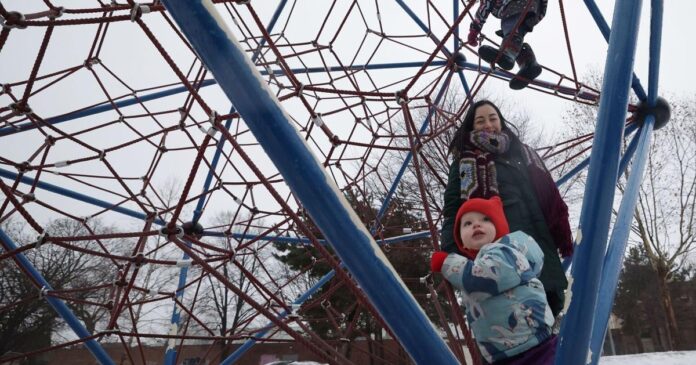

Which Toronto neighbourhood is tops for kids to play in? A recent study conducted by the University of Toronto, in collaboration with the non-profit organization Earth Day Canada, reveals the best — and worst — neighbourhoods for children’s outdoor play. The groundbreaking study introduces Canada’s first-ever “playability index”, assessing how well neighbourhoods across major cities support outdoor play for children.
Understanding the Playability Index
The playability index is a comprehensive measure designed to assess how conducive a neighbourhood is to children’s outdoor play. It factored in various elements like the availability of green spaces, playgrounds, safety, air quality, and even the presence of amenities like public washrooms. The index provides a score out of 100, with higher scores indicating better playability.
According to the University of Toronto’s research team, this index aims to highlight the importance of outdoor play in children’s overall health and development. Furthermore, it seeks to guide urban planning and policy decisions to create more child-friendly neighbourhoods.
Findings of the Study
The study scrutinized over 140 neighbourhoods across five of Canada’s largest cities – Toronto, Vancouver, Calgary, Montreal, and Halifax. The findings presented some interesting data. It revealed that no neighbourhood scored a perfect 100, indicating that there is room for improvement across the board. However, some neighbourhoods fared better than others.
In Toronto, the best neighbourhood for children’s outdoor play was found to be the Beaches, scoring an impressive 73.5 out of 100. Meanwhile, the worst was St. James Town, with a score of just 43.5. The average playability score across all five cities was 61.9, indicating a need for concerted efforts to improve children’s access to outdoor play opportunities.
Why the Playability Index Matters
The playability index represents a significant step towards understanding and improving the conditions for children’s outdoor play in urban settings. Research consistently shows that outdoor play is crucial for children’s physical, mental, and social development. A recent report by the American Academy of Pediatrics highlighted the benefits of play, including building active, healthy bodies and improving cognitive skills.
However, urbanization and other factors have led to dwindling outdoor play opportunities for children. The playability index serves as a wake-up call for policymakers, urban planners, and communities to prioritize creating play-friendly environments.
Looking Ahead
The study’s findings have sparked conversations about the importance of playability in urban planning. The hope is that this new index will be instrumental in shaping future policies and initiatives aimed at improving children’s access to outdoor play across Canada.
In conclusion, the playability index provides a critical benchmark for assessing and improving the support for children’s outdoor play in Canadian cities. While the initial findings indicate room for improvement, they also present a unique opportunity to create healthier, happier, and more play-friendly environments for Canada’s future generations.
