

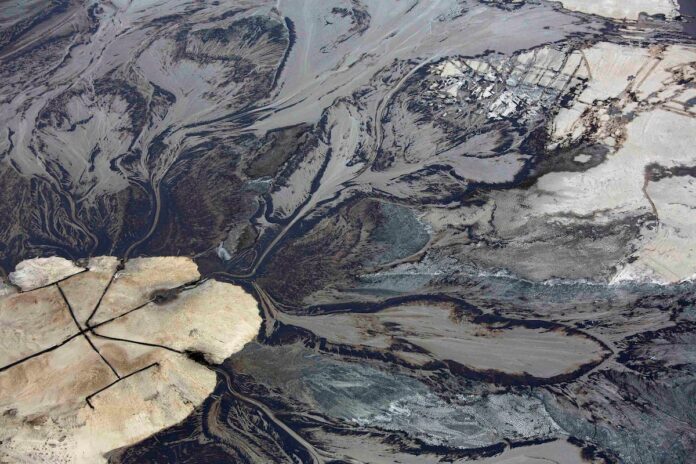

In a new report, the Auditor-General of Alberta has warned that under the current rules governing security payments for mining operations, the citizens of Alberta might end up paying billions of dollars for the cleanup of the oil sands. The Mine Financial Security Program (MFSP) currently holds just $1.8 billion, while the estimated reclamation liability stands at a staggering $51.9 billion. This figure represents the potential cost of cleaning up mines once they reach the end of their operations.
Discrepancy in Asset Values
Auditor-General Doug Wylie has expressed concern that the current method of calculating asset values under the MFSP may overstate their economic worth and, consequently, the ability of companies to cover cleanup costs. “If MFSP assets are overstated, operators might not pay the necessary security, leaving Albertans at risk of bearing the financial costs of oil sands mine reclamation or the mines being unreclaimed,” he wrote in his report.
Government Response
However, the province has dismissed this recommendation as flawed, affirming that the current approach ensures that the program is “stronger than ever.” They argue that the MFSP has been designed to collect funds from oil sands and coal mine owners as security. This, they say, ensures that companies are held responsible for their messes, rather than shifting the financial burden onto taxpayers.
Critics of the MFSP
Despite the government’s confidence in the MFSP, critics argue that the program remains flawed for various reasons. One key issue is that it doesn’t require operators to post full security until six years before the end of mine life. This is concerning, considering the possibility of assets losing value over time. Eric Leonty, assistant auditor-general, pointed out that unlike the oil sands under the MFSP, mines in other jurisdictions often require full security to cover a project’s eventual cleanup costs.
Problems Run Deeper
Andrew Leach, an energy and environmental economist at the University of Alberta, believes that the issues with the MFSP run much deeper than just how the value of mining assets are calculated. He pointed out that the MFSP allows companies to use the value of Crown resources as security against a future liability to the Crown, which he describes as “completely backwards.”
First Nation’s Lawsuit
The MFSP was also at the center of a lawsuit launched by the Athabasca Chipewyan First Nation in April. The community accused the province of failing to address several fundamental flaws in the program, thereby putting the environment at risk and undermining the eventual cleanup of oil sands sites. These claims are yet to be proven in court.
Conclusion
While the government maintains that the MFSP is functioning as intended, the Auditor-General and other critics argue that changes are necessary to protect Albertans from bearing the financial burden of mine reclamation. The debate continues, with the health of the province’s environment and economy hanging in the balance.
