

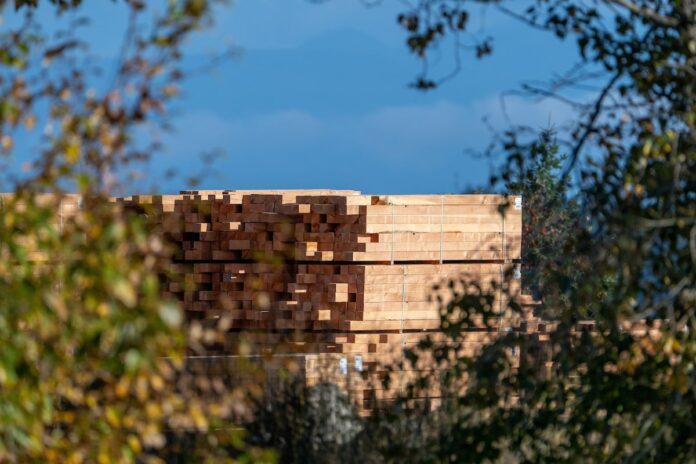

Recent increases in U.S. import taxes on Canadian softwood lumber are causing concerns for home builders. The National Association of Home Builders (NAHB) in the United States has issued a warning about the rising costs associated with these hikes, revealing the significant impact on the construction industry. This comes amid a period of sluggish sales, escalating material and labor expenses, and a difficult market environment.
The Impact on U.S. Home Builders
According to the NAHB chairman, Buddy Hughes, the hike in U.S. duties and new tariffs are having serious repercussions. Builders are struggling with increased costs, a situation exacerbated by a period of slow sales. Hughes disclosed that “Market conditions remain challenging with two-thirds of builders reporting they are offering incentives to move buyers off the fence.”
The NAHB/Wells Fargo Housing Market Index, a measure of homebuilder confidence, has shown a slight improvement. However, overall sentiment remains negative, particularly in perceptions of sales conditions. The index remains well below levels that would indicate confidence among home builders.
Price Reductions and Inflationary Pressures
The index’s latest survey revealed that 40% of builders reported reducing their prices in December, with an average price drop of 5%. However, the NAHB’s warnings about inflationary pressures place it in conflict with the U.S. Lumber Coalition. The coalition argues that the impact of U.S. import taxes on consumers has been vastly exaggerated, as softwood lumber accounts for a small portion of the total costs of constructing a new house.
The Canada-U.S. Softwood Dispute
For decades, the U.S. government has criticized the Canadian system of logging, wherein forests are primarily on Crown land and buyers pay “stumpage fees” to provincial governments for the right to log. The U.S. Department of Commerce argues that these fees provide Canadian companies with an unfair competitive advantage over their American counterparts. However, the Canadian government has rejected these arguments, maintaining that Canadian producers do not benefit from subsidies nor dump their products below market value.
Canadian Response
In response to these ongoing issues, Canada’s Energy and Natural Resources Minister, Tim Hodgson, announced the launch of the Canadian Forest Sector Transformation Task Force. This task force will examine the challenges and opportunities shaping the sector’s global competitiveness and domestic needs.
The goal is to promote the use of Canadian wood products domestically, including mass timber and modular systems. Hodgson also mentioned that Ottawa has unveiled $2.35 billion in financial supports for Canada’s forestry industry since August. However, several forestry groups in Canada have expressed disappointment with the slow rollout of these financial supports.
Current Market Situation
Softwood markets are inherently volatile, with lumber producers insisting that current prices are relatively affordable by historical standards. In fact, benchmark lumber prices are down roughly 75% from the record highs achieved in spring 2021. This price peak was driven by a do-it-yourself construction boom during the COVID-19 pandemic, with consumers snapping up materials for decks, fences, and home renovations.
The Future of the Softwood Industry
The dispute over softwood between Canada and the U.S. is not new. It dates back to the early 1980s and has resulted in significant financial impact on the Canadian industry. With U.S. import taxes on softwood now totaling 45.16% on most Canadian producers, the industry is facing significant challenges. The future of the softwood industry in both countries will likely continue to be influenced by this ongoing trade dispute and resulting policies.
